Showing posts with label Dylan Bob. Show all posts

Wednesday, February 25, 2026

Heartbreaker by Mike Campbell with Ari Surdoval


Soft-spoken guitarist with much to say
Mike Campbell may not be a household name, but you’d probably recognize his face if you saw it. He’s the guy who stood next to Tom Petty for about the past 50 years. Campbell is the guitarist for Tom Petty and the Heartbreakers, as well as Petty’s band from the early 1970s, Mudcrutch. He is also a sought-after session musician, songwriter, and recording producer. Since Campbell’s autobiography, entitled Heartbreaker, was published in 2025, you can add bestselling author to that list. This book is really an excellent rock memoir, even though I’m not a zealous Tom Petty and the Heartbreakers fan. I like their music, but I don’t have all their lyrics memorized or know Petty’s life story. I’m actually a bigger fan of Campbell than I am of Petty. Campbell’s probably one of the top ten living guitarists in rock, and I like the work he’s done with other artists like Bob Dylan, Don Henley, Stevie Nicks, and others. I really enjoyed Peter Bogdanovich’s documentary film about the Heartbreakers, Runnin’ Down a Dream. This band has one of the better rags-to-riches stories in rock. Bogdanovich’s take on the band is a lot more sunshiny than Campbell’s account. Here in Heartbreaker, you get to see a darker side of Tom Petty. Campbell clearly loves and admires Petty, and would die for him, but he relates how Petty at times could be egotistical, vindictive, and, well, petty.

The bulk of Campbell’s account focuses on his and Petty’s early career. Before you ever even get to the Heartbreakers, about a third of the book is spent on Mudcrutch. If anybody still thinks rock and roll is a “money for nothing” profession, they should read Campbell’s recollections of how he and his bandmates had to claw their way to the top. As Campbell relates, he was dirt-poor to begin with, when growing up in Gainesville, Florida. At first, choosing to devote his life to a rock band did not improve his financial situation any, though his malnourishment kept him out of the Vietnam War. Even after the Heartbreakers had a half dozen hits getting frequent radio airplay, and their album Damn the Torpedoes went triple platinum, Campbell was still in financial dire straits. Such is the musician’s plight when your name is not the one in front of the band. Not until Campbell wrote the music to Don Henley’s “Boys of Summer” did he reach a level of financial security where he could reliably pay his mortgage.

Of course, from such humble beginnings things took off considerably. Campbell eventually did get to live the life of a rich and famous rock star. Despite his tremendous success, Campbell comes across as very humble, grateful, and down-to-earth. He talks as if he’s an average-joe, unassuming working stiff who’s just as amazed as we would be when members of the Beatles, the Stones, Fleetwood Mac, or Bob Dylan show up on his doorstep asking for his help. You get some very entertaining and candid behind-the-scenes insights into all of the rock luminaries that Campbell has rubbed elbows with. As a Dylan fan, I really enjoyed Campbell’s humorous and revealing stories about touring and recording with Dylan.

Heartbreaker delivers everything fans could ask for in a rock memoir. I assume Campbell’s coauthor Ari Surdoval is responsible for how well-written this book is. The way the stories unfold is quite skillfully done, captivating, and addictive. Campbell covers the recording of every album, every touring milestone, every band personnel change, every interior personality conflict, and every record company business deal. Not being a musician myself, there’s more here about guitars and playing them than I can understand. Drugs are discussed as a fact of the rock and roll life, not as a badge of honor nor a cross to bear, neither glorified nor scorned. The consequences of drugs are plainly evident in some of the book’s sadder moments—the death of Petty and of bassist Howie Epstein. Overall, however, Campbell’s memoir is a life-affirming celebration of music and friendship, full of humor and poignancy. I read a fair amount of these classic-rock autobiographies, and Heartbreaker is a superb addition to the genre.

Thursday, December 4, 2025

Trouble in Mind: Bob Dylan’s Gospel Years—What Really Happened by Clinton Heylin


More than most fans want to know, and not who you want to hear it from
Although I’m not a true Christian believer, I love Bob Dylan’s gospel period. He made some fine rock and roll from 1979 to 1981 and assembled some excellent musicians to perform it. Dylan’s born-again Christian spell, which encompassed the albums Slow Train Coming, Saved, and Shot of Love, is generally not well-regarded by critics or fans. At the time, some concert-goers expressed outrage that Dylan was only playing his new Christian rock tunes in concert while ignoring his Greatest Hits. This period in Dylan’s musical career perhaps enjoyed a slight resurgence in appreciation with the release of The Bootleg Series Vol. 13: Trouble No More in 2017. To capitalize on the release of that official collection of previously unreleased material, frequent Dylan biographer Clinton Heylin published his book Trouble in Mind: Bob Dylan’s Gospel Years—What Really Happened, also released in 2017.

Heylin takes the “What Really Happened” in the subtitle very literally. His main concern here is to establish a detailed chronology of events, such as the first time Dylan played “Slow Train” in a rehearsal, the first time he attended the Vineyard Christian Fellowship in LA, the last time he played “Saved” in concert, and so on. In great detail, Heylin recaps every recording session, tour rehearsal, concert performance, and on-stage sermon that took place over these three years, as well as newspaper and magazine reviews of Dylan’s concerts and Dylan’s reactions to those reviews. Much attention is accorded to any change in concert playlist or album track selection. It’s a lot of trivial detail, but as a Dylan fan, and in particular a fan of this period, I found all this interesting. Heylin’s research is commendable. If you don’t mind seeing the trees rather than the forest, this book is for you. If, however, you really want to understand Dylan’s religious beliefs, the religious content of his songs, or why he embarked on this gospel trip in the first place, you’re not going to find that here. Thankfully, however, we have Scott Marshall’s excellent 2017 book Bob Dylan: A Spiritual Life to enlighten us on such deeper matters.

What I really don’t like about Trouble in Mind is Heylin’s tone and attitude. First of all, his prose reads as if it were written for a group of his buddies. It’s rather casual and snarky, and Heylin seems too pleased with his own clever turns of phrase. When you’re acting as a journalist and a historian, whether you like it or not, write with a little professionalism and formality. This isn’t a fanzine. Even if you hate Heylin’s prose, however, much of the text is quoted from other sources that are better written.


After reading this book, I have to ask, does Heylin even like Dylan’s music? He certainly doesn’t care much for this gospel era. He frequently states that Saved and Shot of Love are terrible albums, full of lackluster performances. Obviously, I like this period of Dylan’s career or I wouldn’t be reading your book, so why would I want to read about how much this music sucks? Heylin frequently repeats the old chestnut that the studio recordings don’t hold up to the live performances, which is the same gripe you often hear from your friends who like to brag about how many concerts they’ve seen. Heylin thinks it’s his god-given mission to inform you of what he considers Dylan’s every fault and stupid mistake in these three years of his career, whether it’s songs he left off albums, records delivered later than promised, unproductive rehearsal sessions, or song arrangements that Heylin didn’t agree with. This is a relentlessly negative portrait of Dylan as a sloppy, foolish, absent-minded buffoon that the reader is supposed to chuckle along with. Heylin writes as if he’s too good for Dylan. No, you’re not better than the guy you make your living off of. We know he’s quirky, makes messy music, and sometimes weird decisions, but he’s still the greatest rock singer-songwriter of all time and a deserving Nobel laureate. Marshall wrote a book that treats him as such. Heylin has not.

Friday, October 31, 2025

Why Bob Dylan Matters by Richard F. Thomas


Dylan the classicist (i.e. ancient Greece and Rome)
Richard F. Thomas is a professor of classics at Harvard University, “classics” in this context meaning the literature and culture of ancient Greece and Rome (in Thomas’s case, more Rome than Greece, I believe). Thomas is also an avid and diehard fan of Bob Dylan. Thomas’s 2017 book Why Bob Dylan Matters arises from the Venn-diagram intersection where those two circles of interest overlap. Thomas uses his prodigious knowledge of classical texts and Dylan lyrics to point out parallels between the two, asserting that Dylan frequently makes references to the works of Virgil, Ovid, Homer, and other classical writers in his songs.


The bulk of this book discusses intertextuality in Dylan’s work, what laymen might call borrowing, sampling, or stealing from prior works of literature and music. To those of us who aren’t professors of classics or literature, where that’s most apparent is when Dylan recycles snippets of lyrics from traditional folk songs and old blues tunes. Thomas, however, has uncovered and enumerated many instances where Dylan has borrowed from ancient Greek and Roman poetry, in particular the epics The Aeneid and The Odyssey. Thomas asserts that Dylan is somewhat obsessed with Rome: “Clearly Dylan feels a connection to the antiquity of Rome, as he does with no other place.” That seems like a bit of a stretch to me—wishful thinking for a classics professor, perhaps—but there certainly is some merit to Thomas’s point. He states his case well by making many side-by-side lyrical comparisons that are quite interesting interpretations of Dylan’s art.


Thomas focuses primarily on the periods in Dylan’s career that most scholars and commentators emphasize: the ‘60s classics like “Blowin’ in the Wind” and “Masters of War,” the 1976 album Blood on the Tracks, and Dylan’s renaissance of the late ‘90s and early 2000s from Time Out of Mind to Tempest (the last Dylan album released before this book was published). It is in the latter period in particular that Thomas finds many references to ancient Rome and The Odyssey, so Time Out of Mind, “Love and Theft,” Modern Times, and Tempest are all examined in detail.


One big problem I have with this book is the way it’s packaged—the title and the cover design. There’s nothing to indicate that this book has anything to do with the Greek and Roman classics. Why Bob Dylan Matters is an incredibly generic title for such a specific approach to Dylan’s music. Before buying the book, I browsed through the table of contents and got the idea this was a lit-crit book defending Dylan’s right to win the Nobel prize. Right up front in chapter one, however, Thomas makes it clear that this is a book about Dylan’s relationship to ancient Rome. Shouldn’t the title and/or subtitle make that clear? Why not call the book Dylan and the Classics, or Dylan and Ancient Rome, or Bob Dylan and the Early Roman Kings (to quote a song title)? I get the feeling the publisher William Morrow deliberately tried to hide what this book is about in hopes of misleading more people into buying it. I like what Thomas has to say about Dylan, but not every Dylan fan is going to get into a book about Cicero, Virgil, and Catullus.


Like any book on Dylanology, Why Bob Dylan Matters gets into much parsing of words, hair-splitting of trivial facts, and conjectural mind-reading of the Bard from Hibbing. That can be annoying at times, but if you’re a Dylan fan, that’s also part of the fun. I wasn’t blown away by Thomas’s revelations, but I did learn quite a bit and gained insight into Dylan’s songs and writing process. This book renewed my enthusiasm for music that I already loved. It made me want to go back and listen closely to those albums discussed. If a book of music criticism can manage to do that, then in my opinion it’s accomplished its mission.

Tuesday, June 17, 2025

The Producer: John Hammond and the Soul of American Music by Dunstan Prial


One of jazz and rock’s most influential tastemakers
As a fan of classic rock music, I know of John Hammond as the record producer and Columbia executive who discovered Bob Dylan, Bruce Springsteen, and Stevie Ray Vaughan. (It’s Hammond’s grinning visage, looking like he could be Stevie Ray’s dad, that graces the back cover of Vaughan’s debut album Texas Flood.) Journalist Dunstan Prial’s 2006 Hammond biography The Producer, however, has taught me that there was much more to Hammond’s long and influential career in the recording industry.


The bulk of this book is concerned not with the history of rock but with jazz. In fact, Hammond’s first encounter with Dylan in the early 1960s doesn’t occur until chapter 12 of 16. Hammond’s career started way back in the 1930s working with artists like Benny Goodman (who eventually became his brother-in-law), Billie Holiday, and Count Basie. Through his work as a critic for DownBeat magazine, a talent scout and producer for record companies, and an all-around jazz impresario, Hammond helped launch some of the biggest stars of the swing era. On the tail end of the jazz age, he also discovered Aretha Franklin and produced her first two albums.


John Henry Hammond Jr. decided at a young age that he wanted to work in the music industry. One of the reasons he was able to make that dream a reality is that he was independently wealthy, being a great-great-grandson of railroad and shipping tycoon Cornelius Vanderbilt. (Gloria Vanderbilt, more famous in recent years, was his first cousin.) To establish himself in the music business, Hammond often worked for free or for little pay, just for the joy of making music. He would often use his own money to finance a record, a concert, or to keep a hungry musician afloat. He had no musical talent himself (at least none is discussed in this book), but he had great taste and a keen eye for spotting future superstars. In The Producer, Prial argues convincingly that Hammond’s taste was instrumental in shaping American popular music in the 20th century.


In addition to his contributions to the music industry and popular culture, Hammond was active in the civil rights movement. Seeing jazz music as a means to further the integration of Blacks into American society, Hammond was the first music producer/promoter to put Black and White musicians together on the same stage. When, at Hammond’s urging, Benny Goodman added Black musicians Teddy Wilson and Lionel Hampton to his band, it was a milestone moment in racial integration that preceded Jackie Robinson’s debut in Major League Baseball by a decade. Hammond was also a long-time board member of the NAACP before resigning in protest over the organization’s disagreements with Martin Luther King Jr.


Prial interviewed Hammond’s sister and sister-in-law, some industry associates like Atlantic Records’ Ahmet Ertegun, and a few musicians such as Hampton, Springsteen, and the surviving members of Vaughan’s band Double Trouble. Most of Prial’s research, however, comes from previously published biographies, interviews, and some archival documents—sources into which he has dug admirably deep and wide. Springsteen’s vivid and exuberant recollections of Hammond’s benevolent guidance are really the highlight of the book for rock fans. Much of the Dylan material comes from Dylan’s Chronicles memoir. Prial’s narrative highlights about ten or twelve big stars that Hammond discovered and/or championed. There is much praise here for Hammond’s major accomplishments, but this is not a unilaterally positive, hero-worshipping biography. Hammond had his faults and difficulties as well. The reader gets a balanced and comprehensive sense of Hammond’s personality from Prial’s well-researched and well-written account.

Thursday, August 29, 2024

Rock and Roll, Part 2

More music history and biography
Although this topic has nothing to do with the title of this blog, every once in a while I review recent books about rock music. Back in 2018, I published a post on rock and roll autobiographies (mostly), featuring eight books on Bob Dylan, Pete Townshend, Keith Richards, Eric Clapton, Neil Young, Warren Zevon, Morrissey, and Bob Mould. Since then I’ve reviewed enough music nonfiction to fill another omnibus post recapping past reviews on the subject. Below is the latest crop of books on rock and rollers. Click on the titles below to read the full reviews.

Biographies and Autobiographies

Bobby Womack: My Story 1944–2014 by Bobby Womack and Robert Ashton (5 stars)
This may be the best rock and roll autobiography I’ve ever read. Bobby Womack lived a hard life, enduring much tragedy and hardship, and he tells his story with an unflinching honesty that is admirable and captivating. In addition to his own successful career as a soul singer and guitarist, Womack worked with a long list of rock and roll legends, many of them now Hall of Famers like himself. The stories he tells of these famous acquaintances really reveals their personalities and enlarges your understanding of each individual. Womack’s life story will sometimes make you laugh, might make you cry, and every once in a while may even give you the heebie jeebies.

Sly and the Family Stone: An Oral History by Joel Selvin (5 stars)
This gripping band biography is compiled from interviews with about forty different people who lived and/or worked with Sly and the band. Sly Stone himself, a recluse since the 1980s, did not participate. Sly was a successful radio DJ in San Francisco before he decided to form his own band and demonstrate his musical genius on albums like Stand! and There’s a Riot Goin’ On. With escalating fame, however, came escalating drug use and paranoia. This narrative quickly goes south from a success story to a horror story, with former Family Stone members telling harrowing stories of Sly’s erratic and dangerous behavior. This is definitely not a feel-good story, but it’s a riveting read.

And on Piano . . . Nicky Hopkins: The Extraordinary Life of Rock’s Greatest Session Man by Julian Dawson (4.5 stars)
Even if you’ve never heard of Nicky Hopkins, you’ve certainly heard his work. One of the greatest piano players in rock music, Hopkins played on some of the best albums of the Rolling Stones, the Who, the Kinks, the Beatles (mostly their solo records), and more. Hopkins was an official member of a few bands, most notably Quicksilver Messenger Service, but for most of his life he was a much sought-after session man who worked as a hired gun on hundreds if not thousands of recordings. This thoroughly researched book charts the roller coaster career of this humble but highly respected session man who barely achieved fame and never really achieved fortune. 

Ronnie by Ronnie Wood (4.5 stars)
Before joining the Rolling Stones, Ron Wood had already enjoyed quite a successful career in rock and roll, having previously played with The Birds, The Creation, The Jeff Beck Group, The Faces, and Rod Stewart, in addition to his own solo albums. In Ronnie, Wood charts his trajectory from blue-collar upbringing to multimillionaire superstar in charming, articulate, and humorous prose. There is plenty of interesting stuff in here about Wood’s personal life and also about what it’s like to be a Rolling Stone. Though maybe not the most candid of memoirs (as far as his drug use and love life are concerned), this is an entertaining and satisfying read and more enjoyable than Keith Richards’s Life.

The Never-Ending Present: The Story of Gordon Downie and The Tragically Hip by Michael Barclay (3.5 stars)
Though little known South of the border, The Tragically Hip is Canada’s biggest rock band, cranking out challengingly innovative rock albums since 1987. After lead singer Gordon Downie was diagnosed with terminal brain cancer, the band went on a farewell tour in 2016. Their final concert was a nationally televised event, and Downie’s death inspired nationwide displays of mourning. This book provides a history of the band, but also goes off on numerous digressions. Downie is highlighted at the expense of the other band members, which is unfortunate because they’re all excellent musicians.

Hellraiser: The Autobiography of the World’s Greatest Drummer by Ginger Baker with Ginette Baker (3 stars)
Widely considered one of the greatest rock drummers of all time, Baker pounded the skins for Cream, Blind Faith, Ginger Baker’s Air Force, the Graham Bond Organization, and Nigerian jazzman Fela Kuti, among others. Baker may have been an excellent musician, but he and and his daughter, who coauthored this book, do not make a great writer. Hellraiser is a rapid-fire string of one-paragraph anecdotes, one after the other, with no continuity, momentum, or suspense. One learns a lot about Baker’s post-stardom life in Africa and his passion for polo. Though Baker and his daughter want you to think his notorious cantankerousness is lovable, he does not come out as likable as they wished. The best you can say about this autobiography is that it does give you a glimpse into the man’s personality, for better or worse.

Sticky Fingers: The Life and Times of Jann Wenner and Rolling Stone Magazine by Joe Hagan (3 stars)
Jann Wenner, founder and longtime editor of Rolling Stone, authorized this biography, but it is in now way flattering to him. It’s basically an extended psychological study about what a jerk he is. The most disappointing thing about the book is that there really aren’t much in the way of rock and roll stories, just a lot of Wenner and his friends doing drugs, sleeping around, and being mean to each other. This is a very well-researched and well-written work of investigative journalism, but it’s also just really depressing to read a book full of so many unlikable people.

Music History and Criticism

Twilight of the Gods: A Journey to the End of Classic Rock by Steven Hyden (4 stars)
Music critic Steven Hyden celebrates all things classic rock and ponders what kind of future the genre will have now that its stars are dying out. There is also an autobiographical component here as Hyden describes his youth growing up under the influence of classic rock. This will especially appeal to readers from Wisconsin who, like Hyden and myself, grew up listening to the classic rock station WAPL.

Muscle Shoals Sound Studio: How the Swampers Changed American Music by Carla Jean Whitley (2.5 stars)
Some of the greatest recordings in the history of classic rock came out of Muscle Shoals, Alabama. This book recounts the history of one recording studio, the Muscle Shoals Sound Studio, run by a group of expert session musicians known as the Swampers. Unfortunately, the author just quotes a bunch of magazine articles and doesn’t really provide any inside information. I would recommend watching the documentary film Muscle Shoals instead.

Songs and Their Stories


The Rolling Stones All the Songs: The Story Behind Every Track 
by Philippe Margotin and Jean-Michel Guesdon (4.5 stars)

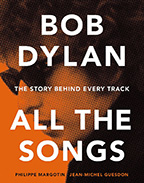
Bob Dylan All the Songs: The Story Behind Every Track by Philippe Margotin and Jean-Michel Guesdon (4 stars)

The All the Songs series is just what it claims to be: commentary on every album and every track recorded by the artists featured, including information on the writing and recording of each song and some explanation of lyrics. The print editions are heavily illustrated coffee table books; the ebook editions are pictureless, but still very informative.

The Songs He Didn’t Write: Bob Dylan Under the Influence by Derek Barker (5 stars)
An encyclopedia of songs that Dylan has covered, in concert or recordings, up to 2008. This book provides a detailed and enlightening glimpse into Dylan’s musical influences. At first glance, this book seems like it would only appeal to the most diehard Dylanologists, but it is quite surprising how much interesting information it delivers on the history of American popular music in general.

Dylanology


Bob Dylan: A Spiritual Life by Scott M. Marshall (4.5 stars)
A deep dive into Dylan’s spiritual influences and the religious subject matter in his music. Marshall gives welcome attention to Dylan’s gospel period of the late ’70s to early ’80s and analyzes the interplay between Judaism and Christianity in Dylan’s life and work.

Dylan: Disc by Disc by Jon Bream (4.5 stars)
An assortment of rock critics, Dylan biographers, university professors, musicians, and DJs—arranged in pairs—debate the merits and deficiencies of each Dylan album. The selection of contributors is interesting, and every album gets equal treatment, even those that are often derided.

Bob Dylan: The Essential Interviews, edited by Jonathan Cott (4 stars)
The title is pretty self-explanatory: an anthology of Dylan interviews from throughout his career.

Bob Dylan: Like a Complete Unknown by David Yaffe (3 stars)
A collection of four highbrow music-critic essays. Two are pretty enlightening; the other two not so much.

Monday, December 20, 2021

Bob Dylan All the Songs: The Story Behind Every Track by Philippe Margotin and Jean-Michel Guesdon


An entertaining and informative track-by-track retrospective
The substantial coffee table book Bob Dylan All the Songs lives up to what its title claims. French authors Philippe Margotin and Jean-Michel Guesdon discuss each and every song from Dylan’s prolific output of studio albums. I have the first edition (with a red cover) published in 2015, which covers Dylan’s recordings through Shadows in the Night. In January of 2022 a second expanded edition (with yellow cover) will be released that updates the coverage through his 2020 album Rough and Rowdy Ways. I believe this was the second All the Songs book compiled by Margotin and Guesdon, following a volume on the Beatles. They have since produced a whole series of such books on several classic rock bands including the Rolling Stones, Pink Floyd, and Led Zeppelin.


Each of the book’s chapters is devoted to one of 36 Dylan studio albums, presented chronologically. Each chapter begins with an introduction on the making of the album—how it was written, recorded, and what was going on in Dylan’s life at the time. This is followed by a few paragraphs of discussion about each song. The authors shed light on the inspiration for the song, older folk songs that influenced it, the meanings of the lyrics, the musicians who accompanied Dylan, and other production details. Only studio albums from the official Dylan canon merit a chapter. Live albums and the Bootleg Series do not, but previously unreleased selections from the Bootleg albums are included for discussion as outtakes of the albums for which they were originally intended. Odds and ends like isolated non-album singles and movie soundtrack songs are also covered. Each song is only discussed once, so alternate takes do not get their own entry.

Though commendably comprehensive, all albums and songs are not granted equal coverage. Dylan’s first ten albums take up about half the book, while the following 26 records occupy the second half. Even so, Margotin and Guesdon pay respectful attention to albums that many Dylan critics consider terrible or insignificant. The gospel trilogy in particular is reviewed positively and treated thoughtfully, with the authors demonstrating a thorough knowledge of Dylan’s biblical references. They also give due credit to Dylan’s recordings of the ‘80s, instead of, like so many critics, merely bemoaning the fact that they don’t measure up to the glory days of the ‘60s.

This book delivers a very entertaining and educational retrospective of Dylan’s career. It was fun to read a chapter, listen to the album, read the next chapter, listen to that album, and so on. Although occasional song entries come across as vague or conjectural, overall the authors provide much informed and insightful detail, going far above the common knowledge of the casual Dylan fan. The songs are not discussed in as great a level of detail as in Derek Barker’s The Songs He Didn’t Write or Michael Gray’s Bob Dylan Encyclopedia, but the former only discusses Dylan’s cover songs and the latter only singles out his “important” songs. Margotin and Guesdon cover everything. One annoying aspect of Margotin and Guesdon’s song reviews, however, is that they feel compelled to point out the “mistakes” in each song, such as Dylan sings a plosive at 1:56 or the buttons of Dylan’s jacket hit his guitar at 2:32. Who cares? If you’re a Dylan fan, you probably don’t.


The hardcover edition is attractively designed with many photos, making for enjoyable browsing. The main attraction of this book, however, is the detailed examination of Dylan’s songs, and one can appreciate Margotin and Guesdon’s insights just as well through the ebook edition.

If you liked this review, please follow the link below to Amazon.com and give me a “helpful” vote. Thank you.

Thursday, September 2, 2021

The Songs He Didn’t Write: Bob Dylan Under the Influence by Derek Barker


Encyclopedic guide to the troubadour’s repertoire
Bob Dylan has written at least 600 songs, but he has still found the time to perform hundreds of songs written by other artists, whether live in concert on his Never Ending Tour or recorded amongst his numerous albums. Dylan fans know that Bob is not only America’s greatest songwriter but also rock and roll’s premier tour guide through American musical history. Dylan has resurrected scores of classic songs from the folk, blues, country, bluegrass, gospel, and rockabilly genres and reintroduced them to a whole new generation of listeners. Derek Barker, editor of the magazine devoted to Dylan entitled ISIS, makes these often surprising and obscure selections the subject of his book The Songs He Didn’t Write: Bob Dylan Under the Influence.


The bulk of Barker’s book is formatted as an encyclopedia with the song entries listed in alphabetical order. While Dylan has devoted entire albums to cover songs, like Good as I Been to You and World Gone Wrong, the majority of The Songs He Didn’t Write were performed in concert and are only available on bootleg recordings. (Dylan’s official Bootleg Series, however, has made many formerly hard-to-find recordings accessible to the masses.) Each song’s encyclopedia entry discusses who wrote it, when and where Dylan played or recorded it, other artists’ renditions of it, and how Dylan may have learned it.

Folk songs often have interesting back stories, sometimes going back centuries, and Barker delves into the historical details of such classics. In addition, Barker treats the reader to mini-biographies of many important musical figures who influenced or impressed Dylan, such as Woody Guthrie, Robert Johnson, Jimmie Rodgers, Elizabeth Cotten, the Carter Family, David Bromberg, and Warren Zevon, just to name a few. One also gets quite an education on the modern history of folk music, like how musicologists such as Alan Lomax and the poet Carl Sandburg sought out, recorded, and compiled the music and lyrics of traditional songs that became standards in the Greenwich Village coffee houses of Dylan’s formative years. At first glance this book seems like it would only appeal to the most diehard Dylanologists, but it is quite surprising how much interesting information it delivers on the history of American popular music in general.

In addition to the encyclopedic entries, Barker provides three appendices. The first is a list of Dylan recording sessions with details about each session. This is not a complete list but rather one focused on cover songs. The second appendix is a list of bootleg recordings that circulate among collectors. The third appendix provides more information on some relevant topics, such as Lomax’s archive of field recordings or the Theme Time Radio Hour program in which Dylan as disc jockey served up many of the songs that influenced him.

The Songs He Didn’t Write was published in 2008, between Dylan’s studio albums Modern Times and Together Through Life. The cover songs on The Bootleg Series Vol. 8: Tell Tale Signs (2008) are also included. This was several years before Dylan’s three-album Frank Sinatra phase and his Christmas album, all of which have added many more cover songs to his repertoire. In the intervening years, he’s also performed quite a few covers not included here. Luckily, Barker recently published a 160-page “Supplement” to this excellent reference work, which covers Dylan’s career up to 2020. I look forward to reading it.
If you liked this review, please follow the link below to Amazon.com and give me a “helpful” vote. Thank you.
https://www.amazon.com/review/R3QK0XEOKUR7HS/ref=cm_cr_srp_d_rdp_perm

Friday, March 1, 2019

Bob Dylan: A Spiritual Life by Scott M. Marshall


The slow train’s still coming
In contrast to the prevailing critical consensus that Bob Dylan did all of his best work in the ‘60s, my favorite period of Dylan’s career consists of his three gospel albums from 1979 to 1981 (Slow Train Coming, Saved, and Shot of Love) and the two albums that bookended them (Street-Legal and Infidels), which also deal with religious themes. During this era, Dylan was always backed up by a top-notch band, and his lyrics were quite fascinating and compelling. Though I am not a religious man, I appreciate the ever-present biblical references in Dylan’s lyrics in much the same way that a classical philologist appreciates Homer’s references to Greek mythology. Despite our difference in beliefs, the moral message still comes through. Looking to learn more about Dylan’s gospel period and the religious views he’s held throughout his life, I couldn’t have asked for a better guide than Scott M. Marshall’s 2017 book Bob Dylan: A Spiritual Life.

For the most part, Marshall examines Dylan’s career chronologically. The book is broken up into chapters devoted to each calendar decade, rather than by any stages in Dylan’s musical development, which seems a strangely arbitrary choice. Marshall’s rather generic thesis, as stated in the introductory chapter, also doesn’t inspire much confidence. He asserts that Dylan has been and is still a monotheist. Gee, ya think? Since Marshall’s not really going out on a limb with that statement, I was worried that this was just going to be a catalog of spiritual references in Dylan’s songs, but it turned out to be much more than that. Beyond an encyclopedic mining of Dylan lyrics, Dylan interviews, and Dylan criticism, Marshall interviews many of Dylan’s associates and does a great job of insightfully connecting the dots between all the data he’s amassed.

I remember growing up in the ‘80s and hearing about how brave U2 was for singing songs with Christian imagery. That was nothing compared to what Dylan did when he became “born again.” He alienated his fan base to the point where he was getting death threats every night he was on tour. He also lost a lot of friends who couldn’t understand this new direction in his music and his life. Marshall covers this period beautifully, providing stories from Dylan’s friends, religious advisors, bandmates, and crew about what those gospel tours were really like, and it is a crazy and fascinating ride. Looking through the notes for the chapters on the ‘70s and the ‘80s, one sees the phrase “Author interview” repeated over and over again, a testament to the diligent legwork Marshall conducted in investigating this mysterious period in Dylan’s life. The chapters after that, not so much, but I still learned a great deal about Dylan, and the book is really an addictive read.

Many critics have argued over whether Dylan is a Jew or a Christian, or have chastised him for not being enough of either. Marshall illustrates that Dylan is both, and he draws his spiritual strength from both faiths. Dylan is essentially a Jew who believes that Christ was the Messiah promised by the Hebrew prophets. Marshall also finds fault with those who think Dylan’s embracing of Christianity ended in 1981. He demonstrates how Dylan has continued to make statements of belief, both Christian and Judaic, in music and interviews up to the present day.

Just as you don’t need to be a Christian to get the protest message of “Slow Train,” you don’t need to subscribe to any particular faith in order to enjoy this book. In fact, nonbelievers can probably appreciate the book more objectively than those looking to take sides in the argument over Dylan’s beliefs. As an avid fan, this is one of the best books on Dylan that I’ve read.
If you liked this review, please follow the link below to Amazon.com and give me a “helpful" vote. Thank you.
https://www.amazon.com/review/R3RYSQJXWQ6QU7/ref=cm_cr_srp_d_rdp_perm

Tuesday, January 22, 2019

Bob Dylan: Like a Complete Unknown by David Yaffe


Four topical essays: two hits, two misses
David Yaffe’s 2011 book Bob Dylan: Like a Complete Unknown is divided into four chapters, each of which is a thematic essay focusing on one aspect of Dylan’s art. The subjects are Dylan’s singing voice, Dylan and film, Dylan and blackness, and Dylan and plagiarism. Yaffe attacks these topics in a manner neither chronological nor systematic, but rather in a free-form style that often mimics the cadence of Dylan’s own writing, cherry-picking whatever bits of his encyclopedic knowledge of Dylanology is required to support each essay’s thesis.

The first two chapters were quite disappointing. Though I would consider myself an ardent fan of Dylan’s music, I’m certainly not a scholar on the subject, nor would I even call myself an aficionado, yet still I learned almost nothing new about Dylan from these first two essays. They are not so much about Dylan as they are about Yaffe’s opinions on Dylan. Their primary purpose is not to educate the reader but to showcase Yaffe’s writing, as if a clever turn of phrase were of the utmost importance. The chapter on Dylan’s vocal development is really just Yaffe giving you a summary of Dylan’s recording output while coming up with creative adjectives to describe the singer’s voice, “adenoidal” being the author’s oft-repeated favorite. The chapter on Dylan’s life in film also yielded little new information. The reader learns more about Martin Scorsese and Todd Haynes than about Dylan himself.

Fortunately, the latter two essays are a vast improvement over the first half of the book. Here is where the reader begins to see how a music critic approaching Dylan from a cultural studies perspective can actually enlarge your understanding of the man’s music. Essay number three, “Not Dark Yet,” examines Dylan’s relationship to African American musical culture, his periodic adoption of a “blackish” performing persona, and even his preference for African American women. Yaffe enlightens the reader on music history and makes insightful points, like when he draws parallels between Dylan’s emulation of black blues singers and the history of 19th and early 20th century minstrel shows. The final chapter focuses on accusations of plagiarism against Dylan and his penchant for alluding to or lifting from existing lyrics and melodies. Here one learns much about the sources of inspiration for many of Dylan’s songs. Though Yaffe points out there is some truth to the plagiarism rap, particularly in the case of Dylan’s borrowing from a contemporary Japanese novelist, in general Yaffe sees Dylan’s cut-and-paste songwriting in a positive light (as do I) and portrays Dylan as an artist who has deftly mined the public domain to become a master sonic assemblagist, a sort of Robert Rauschenberg of American music.

Yaffe finishes the book with a list of what he considers the 70 most important Dylan songs. His choices are not unexpected and pretty much trumpet the usual suspects, with selections heavy on the Bringing It All Back Home, Blonde on Blonde, and Blood on the Tracks albums. He doesn’t really draw attention to any unsung gems, so again, not much to learn here. Every fan has probably already made up his or her mind what Dylan songs are the best. Likewise, if you are conversant enough in Dylanology to want to read this book, chances are you already know much of what is contained herein. Still, there are nuggets of insight here and there to make it worthwhile for hardcore fans.
If you liked this review, please follow the link below to Amazon.com and give me a “helpful” vote. Thank you.
https://www.amazon.com/review/RW97BXQSPQFIV/ref=cm_cr_srp_d_rdp_perm

Monday, February 12, 2018

Bob Dylan: The Essential Interviews, edited by Jonathan Cott


With age comes wisdom
Bob Dylan: The Essential Interviews was originally published in 2006 by Wenner Books, a division of Rolling Stone magazine. Though published by Rolling Stone and edited by Rolling Stone writer Jonathan Cott, the 31 collected interviews are not limited to Rolling Stone articles but also include selections from Playboy, the New York Times, the L.A. Times and several other publications. In 2017, Simon & Schuster published an updated edition with three additional interviews, all of them from Rolling Stone, the most recent being from 2009.

At first, even for a huge Dylan fan like myself, this book is a difficult slog to get through. Dylan made some great music back in the ‘60s, but he was a terrible interview subject. This is the same smart-aleck Dylan you see in the movie Don’t Look Back, who answers questions with questions or responds with surrealistic wordplay that’s often just nonsense masked as profundity. He aims for an image of irreverence but usually achieves deliberate disrespect, and very little of worth is revealed in the process. The most frustrating thing about reading these early interviews is that the journalists never call him on it. They either let his half-baked answers slide or eat them up wholeheartedly. The best interview from the ‘60s is by Jay Cocks, then an undergraduate at Kenyon College when Dylan gave a concert there. That piece really gives you an idea of what Dylan and his crazy life were like back then. Other interviewers, like A.J. Weberman of the East Village Other, just love to hear themselves talk and discuss themselves more than they do the man in question. Editor Cott himself is not the greatest of interviewers. He seems to want to impress Dylan with his knowledge of Bartlett’s Quotations, and he raves about Dylan’s film Renaldo and Clara as if it were a Fellini masterpiece, an assessment with which few movie critics are likely to agree.

Finally, around page 200, Dylan matures and so do his interviewers. By this time he has a wife and kids, and he seems to have realized that journalists are just people doing their jobs, not evil antagonists. Most importantly, he finally starts to answer questions with real answers, even though they are still often rendered in his own unique cryptic syntax. He comes to terms with his role as a rock star, respects his fans and the people he’s speaking to, and seems genuinely concerned about imparting the legacy of his musical knowledge to future generations. At this point the book really gets interesting as it delves deeply into the writing, playing, and recording of music. The interviews included here provide some truly fascinating insight into Dylan’s born-again Christian period, his lackluster ‘90s, and his Time Out of Mind renaissance. One really learns a lot about the man and his career, his artistic motivations, his approach to songwriting, and his philosophy towards life.

Because all the interviews are reprinted in their entirety (as they should be), it can be quite a repetitive read. Even in the 21st century, each journalist feels the need to provide a nutshell retrospective biography—born and raised in Hibbing, MN; idolized Woody Guthrie; etc.—so you get to read that 34 times. Still, for such a book it is better to err on the side of thoroughness, and the result is an invaluable reference for Dylanologists. One hindrance for researchers, however, is the lack of an index. Maybe that doesn’t matter in the age of ebooks, but if you’ve got the print edition, good luck finding that pertinent passage about a particular song or album. Ultimately, however, the opportunity to get Dylan’s story straight from the horse’s mouth outweighs the book’s faults and makes this volume a must-read for Dylan fans.
If you liked this review, please follow the link below to Amazon.com and give me a “helpful” vote. Thank you.
https://www.amazon.com/review/R2YFNDRZHHSGMF/ref=cm_cr_srp_d_rdp_perm

Thursday, October 13, 2016

Old Books by (Mostly) Dead Nobel Laureates 2016

Congratulations to Bob Dylan!
Though there has been talk about the possibility for years, I could not have been more surprised to read this morning that American songwriter Bob Dylan has won the 2016 Nobel Prize in Literature. The American press loves to whine that the Nobel jury are a bunch of stuffy, ivory-tower America-haters. What a way to prove them wrong! I couldn’t be more pleased that Dylan has finally gotten the literary recognition he deserves.

In honor of the annual occasion, it’s once again time to post the cumulative listing of all the novels, stories, plays, poetry, and memoirs written by Nobel Prize-winning authors that have been reviewed at Old Books by Dead Guys. Since last year, several new works have been added, and four new authors have joined the list: George Bernard Shaw, Pär Lagerkvist, and Halldór Laxness, in addition to Dylan, who’s way down at the bottom of this chronological list. I’m currently working on Boris Pasternak’s Doctor Zhivago, but didn’t finish it in time, so he’ll have to wait until next year. Once again, congrats to Dylan! Click on the links below to read the complete reviews.

Bjørnstjerne Bjørnson (1903 Nobel) Norway

Henryk Sienkiewicz (1905 Nobel) Poland

Rudyard Kipling (1907 Nobel) United Kingdom

Selma Lagerlöf (1909 Nobel) Sweden

Paul von Heyse (1910 Nobel) Germany

Maurice Maeterlinck (1911 Nobel) Belgium

Gerhart Hauptmann (1912 Nobel) Germany

Knut Hamsun (1920 Nobel) Norway

Anatole France (1921 Nobel) France

Wladyslaw Reymont (1924 Nobel) Poland

George Benard Shaw (1925 Nobel) Ireland

Sinclair Lewis (1930 Nobel) United States of America

Eugene O’Neill (1936 Nobel) United States of America

Pearl S. Buck (1938 Nobel) United States of America (raised in China)

Hermann Hesse (1946 Nobel) Switzerland (born in Germany)

Pär Lagerkvist (1951 Nobel) Sweden

Halldór Laxness (1955 Nobel) Iceland

Bob Dylan (2016 Nobel) United States of America

See you next year!