Thursday, January 6, 2022

Ten Years of Old Books by Dead Guys

Recapping the first decade
The Old Books by Dead Guys blog turns ten years old today! The first post back on January 6, 2011 was a review of Emile Zola’s novel Thérèse Raquin. One decade and 1,181 blog posts later we’ve reviewed Zola’s complete works, as well as the complete works of Jack London, Frank Norris, and a few others, while continuing to chip away at the extensive oeuvres of many other classic writers, including the usual suspects listed below. Here is a nutshell recap of the highlights from ten years of active and curious reading.

Most Reviewed Authors
Writers with the most blog posts devoted to books by or about them.

  
Pictured: Simak (6th), Sinclair (7th), Simenon (9th)

1. Jack London (80 reviews)
Best books include The Iron Heel, The Call of the Wild, Martin Eden, Before Adam, The Faith of Men, Moon-Face, The Road, John Barleycorn. The best biographies of London are Earle Labor’s Jack London: An American Life and Irving Stone’s Sailor on Horseback. The most viewed blog post at Old Books by Dead Guys, by far, is my list of The Best Short Stories of Jack London.

2. Emile Zola (54 reviews)

Best books include Germinal, La Terre, Pot-Bouille, The Debacle, L’Assomoir, Paris, The Death of Olivier Becaille, The Flood. Frederic Brown’s comprehensive biography Zola: A Life is also a good read.

3. Honoré de Balzac (39 reviews)

Best books include Père Goriot, Cousin Bette, Lost Illusions, Eugénie Grandet, The Hidden Masterpiece, Farewell, also the biography Honoré de Balzac: His Life and Writings by Mary Frances Sandars.

4 (tie). Sir Arthur Conan Doyle (33 reviews)
Best books include The Adventures of Sherlock Holmes, A Study in Scarlet, The Hound of the Baskervilles, The Great Shadow, The Captain of the Polestar, The Doings of Raffles Haw.

4 (tie). H. Beam Piper (33 reviews)

Best books include Police Operation, Genesis, Flight from Tomorrow, The Edge of the Knife, Little Fuzzy. Find them all in The H. Beam Piper Megapack.

6. Clifford D. Simak (30 reviews)
Best books include Way Station, City, Mastodonia, and the excellent series The Complete Short Fiction of Clifford D. Simak.


7. Upton Sinclair (28 reviews)
Best books include The Jungle, 100%: The Story of a Patriot, and the Lanny Budd series.

8. Frank Norris (22 reviews)
Best books include The Octopus, McTeague, The Third Circle, The Pit, Moran of the Lady Letty. Read the post Frank Norris: An Overview for more info.

9. Georges Simenon (21 reviews)
Best books include Dirty Snow, Tropic Moon, and the Inspector Maigret mysteries The Late Monsieur Gallet, A Man’s Head, The Night at the Crossroads, Maigret and the Fortuneteller, Maigret and the Killer.

10 (tie). Pearl S. Buck (17 reviews)
Best books include The Good Earth, Sons, A House Divided, Dragon Seed, The Promise, Command the Morning.

10 (tie). Henryk Sienkiewicz (17 reviews)

Best books include With Fire and Sword, The Deluge, Pan Michael, Quo Vadis. Of related interest: The Memoirs of Jeremiah Curtin (Sienkiewicz’s English translator).

12. Jack Kirby (15 reviews)
Kirby is known for his art more than his writing, but as one of Marvel Comics’ pioneering creators he did both. Some of his best work can be found in Essential Fantastic Four, Volume 1 and Essential Captain America, Volume 5. Mark Evanier’s Kirby: King of Comics is a great biography and retrospective of his art.

13 (tie). Hermann Hesse (14 reviews)
Best books include Steppenwolf, Siddhartha, Narcissus and Goldmund, Gertrude, Knulp. My post The Fiction of Hermann Hesse gives an overview of his career.

13 (tie). Frank Herbert (14 reviews)
Best books include Dune, Dune Messiah, Children of Dune, and God Emperor of Dune. If you get that far you might as well read Heretics of Dune, Chapterhouse: Dune, and The Dune Encyclopedia. His best non-Dune book that I’ve encountered is Soul Catcher.

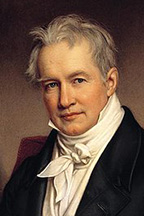
13 (tie). Alexander von Humboldt (14 reviews)
The best books about Humboldt are The Invention of Nature by Andrea Wulf and The Passage to Cosmos by Laura Dassow Walls. Books written by Humboldt include Views of Nature and his three-volume Personal Narrative of Travels to the Equinoctial Regions of America During the Years 1799-1804.

  
Pictured: Kirby (12th), Herbert (13th), Humboldt (13th)

Most Reviewed Nations
While American, French, and English literature lead the pack as far as books reviewed, Old Books by Dead Guys likes to explore books of many nations. Below are the most frequently visited literary destinations.

1. American (568 reviews) 🇺🇸
Jack London, Frank Norris, Upton Sinclair, James Fenimore Cooper, Katherine Anne Porter, John Steinbeck

2. French (187 reviews) 🇫🇷
Emile Zola, Honoré de Balzac, Alexandre Dumas, Victor Hugo, Jules Verne

3. English (162 reviews) 🇬🇧
H.G. Wells, Charles Darwin, Joseph Conrad, Bertrand Russell; also includes the Scottish authors (below)

4. German (49 reviews) 🇩🇪
Hermann Hesse, Paul Heyse, Karl Marx, Alexander von Humboldt, Ernst Haeckel

5. Scottish (44 reviews) 🏴󠁧󠁢󠁳󠁣󠁴󠁿

Sir Arthur Conan Doyle, Sir Walter Scott, Robert Louis Stevenson

6. Canadian (42 reviews) 🇨🇦
Margaret Atwood, Harold Bindloss, Brian Moore, Mazo de la Roche, Grant Allen, Hugh MacLennan, and art books featuring Tom Thomson and the Group of Seven 

7. Polish (39 reviews) 🇵🇱

Henryk Sienkiewicz, Wladyslaw Reymont, Boleslaw Prus, Adam Mickiewicz

8. Mexican (29 reviews) 🇲🇽
Juan Rulfo, Mariano Azuela, Carlos Fuentes, artists Diego Rivera and Leopoldo Mendéz

9. Belgian (25 reviews) 🇧🇪
Georges Simenon, Maurice Maeterlinck

10. Chinese (24 reviews) 🇨🇳
Pearl S. Buck (American raised in China), Confucius, Lu Xun, Mo Yan, and some Chinese-language textbooks

11. Russian (23 reviews) 🇷🇺
Leo Tolstoy, Ivan Turgenev, Boris Pasternak, Mikhail Sholokhov

12. Norwegian (18 reviews) 🇳🇴
Knut Hamsun, Bjørnstjerne Bjørnson, Alexander Kielland, Thor Heyerdahl


13. Swedish (12 reviews) 🇸🇪
Selma Lagerlöf, Frans G. Bengtsson, 
Werner von Heidenstam, August Strindberg

14 (tie). Danish (10 reviews) 🇩🇰, Greek (10 reviews) 🇬🇷, Italian (10 reviews) 🇮🇹


Top Ten Most Reviewed Genres and Subjects
These categories of subject, format, genre, and/or chronology are the most tagged among OBDG’s 1,181 reviews. Some books fit into more than one category.

1. Classic Literature (697 reviews)

2. Modern Literature  (331 reviews)

3. Adventure (247 reviews)

4. Science Fiction (205 reviews)

5. Short Stories (200 reviews)


6. Biography (152 reviews)

7. Nobel Prize (150 reviews) See the complete list of Nobel reviews here.

8. Pulp Fiction (141 reviews)


9. History (129 reviews)

10. Recent books (120 reviews)


Best Omnibus Posts
Occasionally Old Books by Dead Guys publishes a post that doesn’t focus on a single book, but rather explores a particular author, topic, or theme. 

100 Five-Star Books

The Rougon-Macquart Cycle by Émile Zola

The Best Short Stories of Jack London

The Novels of Jack London

Jack London’s Nonfiction

Frank Norris: An Overview


Here’s to another 10 years! Keep on reading Old Books by Dead Guys!

Monday, January 3, 2022

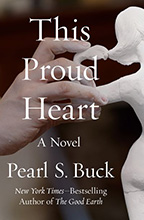
This Proud Heart by Pearl S. Buck


Aspiring sculptress seeks work-life balance in 1930s America
I’ve read about 15 of Pearl S. Buck’s books and consider myself a fan, but with some reservations. Buck won the 1932 Pulitzer Prize for Fiction and the 1938 Nobel Prize in Literature, but not all of her books are award-worthy. This Proud Heart is one of her earlier but lesser-known works. It was originally serialized in issues of Good Housekeeping magazine from 1937 to 1938 before being published in book form.

Buck is best known for writing historical fiction, particularly set in Asia, and her novels often admirably address social issues like racism, human rights, and child welfare. This Proud Heart, however, is set in Buck’s present day of the 1930s, and the protagonist is a middle-class American woman. The issue at hand this time is feminism, more specifically a woman’s right to work. Though written prior to the World War II explosion of women into the workplace, This Proud Heart is an early take on the woman who wants to “have it all”—work, family, love, romance, success, and self-actualization. Unfortunately, the 1930s were still pretty early for such a feminist aspiration, and the only way Buck seems to be able to express the concept is through the medium of what reads like a romance novel, and a rather simplistic and dreary one at that.

Susan Gaylord is an intelligent young woman who seems to stand out as exceptional in everything she does. She sticks out like a sore thumb in her small hometown (somewhere in the northeastern U.S.) and doesn’t quite fit in with the other ladies in her social circle. The biggest dream of her young life is to marry her sweetheart Mark, which she accomplishes in the first chapter, yet she’s far too remarkable to be limited by the standard housewife role of the 1930s. Susan has artistic talent and dreams of becoming a professional sculptor. She self-censors those dreams, however, so as not to threaten her happy home life by intimidating or inconveniencing her devoted but insecure husband.

The most disappointing aspect of This Proud Heart is that for a novel about an artist, Buck really doesn’t demonstrate that she knows anything about art. I don’t believe a single actual sculptor is mentioned by name in the entire book; only the Venus de Milo is namechecked once. Very little technical or aesthetic detail is given to the discussion of Susan’s artistic education. In fact, Buck seems to think that an artist born with a “gift” is capable of generating masterpieces at will without much education or sustained hard work. As a character, Susan is obviously a surrogate for Buck herself and her own experiences with marriage, but Buck’s genius is literature, not art. As the story of an artist’s life and career, This Proud Heart never feels authentic enough to be believed or even interesting.

On the subject of marriage, family, and women’s rights, however, the novel does make some valid points. Mostly it succeeds at pointing out the way marriage sucks, in that it hinders the individual’s ability to reach her full, unbridled potential—a fact certainly true for most American women 85 years ago. A recurring fault in some of Buck’s less successful novels is that in order to showcase strong women she resorts to pairing them with weak men. Susan’s first love interest is practically an emotional and intellectual child, and her second is a creepy chauvinist who makes you dislike her for loving him. This Proud Heart offers a few moments when you really root for Susan, but mostly you’re just annoyed by her and bored with her troubles. Buck’s intentions may have been ahead of her time, but this story comes across too tame, hesitant, and old-fashioned to engage most readers of today.
If you liked this review, please follow the link below to Amazon and leave me a “helpful” vote. Thank you.
https://www.amazon.com/review/R18H20Q972JGDV/ref=cm_cr_srp_d_rdp_perm

Thursday, December 23, 2021

The Best of 2021


Top ten reads of the year
This time each year Old Books by Dead Guys highlights the best books reviewed at this blog over the past twelve months, regardless of when they were published. In 2021 I only posted 83 reviews to the OBDG blog; an all-time low! This year I realized that most of the books I consider worth reading tend to be lengthy opuses. Rather than hunt down a bunch of shorties to fill out the post count, I made a concerted effort to check some major tomes off of my reading list. The result was a very rewarding year of reading. Listed below are my ten favorite reads of the year, arranged chronologically by date of publication. Click on the titles below to read the full reviews.


The Life of Cardinal Mezzofanti by Charles William Russell (1858)
This biography of one of the world’s greatest polyglots (multilinguists) investigates his level of skill in the dozens of languages in which he was reputed to have been fluent. The remarkable accounts of Mezzofanti’s abilities will fascinate any reader interested in languages.

The Evolutionist at Large by Grant Allen (1881)
The enlightening essays in this book by Canadian-British novelist and science writer Grant Allen combine the science of Charles Darwin with the poetic observations of Henry David Thoreau to illustrate how evolution is at work all around us.

The Great Cycle by Tarjei Vesaas (1934)
This coming-of-age novel by one of Norway’s most acclaimed writers of the 20th century draws a stark naturalistic depiction of Norwegian rural life in a bygone era. Though understated and modest on the surface, this excellent novel delivers a deep and powerful reading experience.

The Don Flows Home to the Sea by Mikhail Sholokhov (1940)
The second half of Sholokhov’s realist epic of the Russian Cossacks (following And Quiet Flows the Don) continues the saga of the Melekhov family through the ongoing Russian Civil War. Sholokhov won the Nobel Prize in Literature for this monumental masterpiece.

The Stranger by Albert Camus (1942)
In one of the twentieth century’s most thought-provoking works of philosophical fiction, a French-Algerian is tried for murder, but instead of a standard courtroom drama the reader gets an extended meditation on the absurdity and pointlessness of existence.

The Family of Pascal Duarte by Camilo José Cela (1942)
From the Spanish Nobel laureate comes this dark and disturbing novel in the form of a memoir written by a prisoner on death row for murder. Despite Pascal Duarte’s descent into insanity, the reader can’t help but sympathize with this tragic protagonist.

O, Shepherd Speak! by Upton Sinclair (1949)
This tenth novel in the Lanny Budd series chronicles Lanny’s adventures through the end of World War II and the dawn of the Cold War. This book is the culmination of Sinclair’s landmark series. He should have stopped here instead of writing a substandard eleventh volume.

The Songs He Didn’t Write: Bob Dylan Under the Influence by Derek Barker (2008)
An encyclopedia of all the songs Dylan has covered on record and in concert, this book not only provides insight into Dylan’s musical art but also serves as a fascinating guide to the history of American popular music.

One of the best books on Humboldt in recent years, this study explores the broad range of Humboldt’s intellectual pursuits and traces the lasting ramifications of Humboldtian thought in both the sciences and the humanities. 

History of the Marvel Universe by Mark Waid, et al. (2019)
A comprehensive fictional history of the Marvel Comics Universe, from the Big Bang to the end of time, encompassing its many wonderful and bizarre characters, worlds, and major story lines. Beautifully executed in word and art.
  

See also my best-of lists for 2013, 2014, 2015, 2016, 2017, 2018, 2019, and 2020. Happy reading in 2022! Stay tuned for Old Books by Dead Guys’ 10th anniversary, coming up in a couple weeks.

Wednesday, December 22, 2021

Around the World with Old Books by Dead Guys

Selected books from 40 nations
Old Books by Dead Guys likes to sample world literature, often starting with the Nobel laureates and branching out from there. While the bulk of this blog has focused on American, English, and French literature, OBDG has also done some deep dabbling into Polish, Mexican, Canadian, and Scandinavian literatures. Not surprisingly, European nations have been reviewed the most, due to what’s available in English translation and the public domain. Nevertheless, in the past ten years since the blog’s inception, we’ve covered enough ground (as evidenced by the highlighted map below) to publish a “Parade of Nations” omnibus post.

Below is a list of some of the best books reviewed from 40 different nations. In some cases I’ve only reviewed one book from a particular country (Finland and Portugal, for example), in which case I didn’t really have much choice of what to feature. For other lands where I consider myself somewhat well-read, however, I’ve tried to pick the quintessential book for that nation—what I consider to be the most American book, the most Mexican book, and so on. Most are novels, but some are nonfiction. Enjoy this tour around the literary world! Click on the titles below to read the full reviews.


Algeria 🇩🇿
The Stranger by Albert Camus (1942) - 5 stars
Existentialist novel about a Frenchman in Algeria who is tried for murder.

Argentina 🇦🇷
A Personal Anthology by Jorge Luis Borges (1961) - 3 stars
Collection of short stories, essays, and poems self-edited by Borges.

Australia 🇦🇺
My Brilliant Career by Miles Franklin (1901) - 2.5 stars
Proto-feminist novel of a young woman’s coming-of-age in the Australian bush.

Austria 🇦🇹
Rock Crystal by Adalbert Stifter (1845) - 3 stars
Adventure story of two children lost in a snowstorm in the Alps.

Belarus 🇧🇾
Pan Tadeusz by Adam Mickiewicz (1834) - 3.5 stars
The national epic of Poland, set in Lithuania, by an author born in what is now Belarus. (Borders have changed a lot since then.)

Belgium 🇧🇪
Dirty Snow by Georges Simenon (1948) - 5 stars
Dark noir crime thriller set in Nazi-occupied France.

Brazil 🇧🇷
Brazilian Tales, edited by Isaac Goldberg (1921) - 3.5 stars
Grab bag of late-nineteenth and early-twentieth-century short fiction.

Bulgaria 🇧🇬
Under the Yoke by Ivan Vazov (1890) - 3.5 stars
Victor Hugo-esque romantic war epic set during the April Uprising against the Ottoman Empire.

Canada 🇨🇦
Jalna by Mazo de la Roche (1927) - 4.5 stars
Family drama set on an Ontario farm; part Little House on the Prairie, part Wuthering Heights.

China 🇨🇳
Selected Stories by Lu Xun (1918-1926) - 3.5 stars
A collection of short stories by the writer considered the founder of modern Chinese literature.

Colombia 🇨🇴
One Hundred Years of Solitude by Gabriel García Marquez (1967) - 3.5 stars
Multi-generational family saga set in a remote Colombian village, in the style of magic realism.

Czech Republic 🇨🇿
R.U.R. (Rossum’s Universal Robots) by Karel Capek (1920) - 5 stars
Futuristic science fiction play, in which the word “robot” was first coined.

Denmark 🇩🇰
The Long Journey by Johannes V. Jensen (1908-1922) - 5 stars
(Published in English in three volumes)
Three-volume epic charting the Scandinavian-centric history of mankind from prehistory to modernity.

England 🇬🇧
On the Origin of Species by Charles Darwin (1859) - 5 stars
Perhaps the most important science book of all time. Also a great read for nature lovers.

Finland 🇫🇮
People in the Summer Night by Frans Eemil Sillanpää (1934) - 4 stars
Early modernist collage of vignettes set in a rural Finnish village.

France 🇫🇷
Notre-Dame de Paris by Victor Hugo (1831) - 5 stars
The epic medieval tale of Quasimodo, the Hunchback of Notre-Dame.

Germany 🇩🇪
The Sorrows of Young Werther by Johann Wolfgang von Goethe (1774) - 3.5 stars
This story of unrequited love was the flagship novel of Romanticism. To 18th century teenage German hipsters, this was their Catcher in the Rye.

Greece 🇬🇷
The Elements by Euclid (ca. 300 BC) - Oliver Byrne online edition 3.5 stars
Ancient mathematical text that serves as the foundation of geometry. The Oliver Byrne edition is beautifully illustrated in color.

Hungary 🇭🇺
Tales from Jókai by Mór Jókai (1904) - 3 stars
Short stories by one of Hungary’s most acclaimed writers, with touches of horror and sci-fi.

Iceland 🇮🇸
Seven Icelandic Short Stories, edited by Ásgeir Péturssen and Steingrímur J. Thorsteinsson (1961) - 4 stars
Short stories of Icelandic life including one by Nobel laureate Halldór Laxness.

India 🇮🇳
Mashi and Other Stories by Rabindrinath Tagore (1918) - 3.5 stars
These stories of modern India are a mix of romance, social realism, and a little bit of horror.

Ireland 🇮🇪
The Gadfly by Ethel Lilian Voynich (1897) - 3.5 stars
Though the author is Irish, this novel is about a revolution in Italy and was a big hit in the Soviet Union and China.

Italy 🇮🇹
The City of the Sun by Tommaso Campanella (1602) - 4 stars
17th century utopian novel inspired by Plato’s Republic.

Mexico 🇲🇽
Pedro Páramo by Juan Rulfo (1955) - 5 stars
Surrealist novel by Mexico’s most revered novelist. A landmark book in Latin American literature. 

The Netherlands 🇳🇱
Ethics by Baruch Spinoza (1677) - 5 stars
Meticulous philosophical treatise that spells out Spinoza’s pantheistic worldview in the logical format of a mathematical proof.

Nigeria 🇳🇬
The Interpreters by Wole Soyinka (1964) - 2 stars
Overly obscure novel about a group of young Nigerians who have returned to their home country after studying in Britain and the United States.

Norway 🇳🇴
Growth of the Soil by Knut Hamsun (1917) - 5 stars
Powerful novel of a man and his family wrestling a living from the Earth in rural Norway.

Peru 🇵🇪
The Feast of the Goat by Mario Vargas Llosa (2000) - 4.5 stars
Political thriller about a real-life dictatorship in the Dominican Republic.

Poland 🇵🇱
The Peasants by Wladyslaw Reymont (4 volumes, 1904-1909) - 5 stars
Four-volume naturalist novel that charts the lives of peasants in a rural Polish town over the course of the four seasons.

Portugal 🇵🇹
The Cave by José Saramago (2000) - 3.5 stars
Unconventional novel about a humble potter who works for an Amazon-esque megacorporation.

Romania 🇷🇴
Rhinoceros and Other Plays by Eugene Ionesco (1959) - 2.5 stars
Three bizarre dramas that exemplify Theatre of the Absurd.

Russia 🇷🇺
Doctor Zhivago by Boris Pasternak (1957) - 4 stars
Epic love story of the Russian Revolution.

Scotland 🏴󠁧󠁢󠁳󠁣󠁴󠁿
The Hound of the Baskervilles by Sir Arthur Conan Doyle (1902) - 5 stars
One of Sherlock Holmes and Dr. Watson’s greatest and spookiest cases.

Spain 🇪🇸
The Family of Pascual Duarté by Camilo José Cela (1942) - 4.5 stars
A novel written in the form of a memoir by a murderer on death row.

Sweden 🇸🇪
The Treasure by Selma Lagerlöf (1909) - 5 stars
Chilling horror story set on the icy coast of Sweden.

Switzerland 🇨🇭
Two Little Misogynists by Carl Spitteler (1907) - 3 stars
Despite the strange title, this is a lighthearted novel about three young children—two boys and a girl—lost on an Alpine road.

Turkey 🇹🇷
Snow by Orhan Pamuk (2002) - 3.5 stars
An expat reporter returns to his Turkish hometown in hopes of reuniting with a lost love.

Ukraine 🇺🇦
And Quiet Flows the Don by Mikhail Sholokhov (1940) - 5 stars
Brutally realistic saga of a Cossack family’s struggles through World War I, the Russian Revolution, and the Russian Civil War.

United States of America 🇺🇸
The Octopus by Frank Norris (1901) - 5 stars
Naturalist masterpiece about a conflict between a railroad and ranchers in Southern California.

Uruguay 🇺🇾
Genesis by Eduardo Galeano (1982, first volume in Memory of Fire trilogy) - 3.5 stars
A mix of fiction and nonfiction in a series of historical vignettes that chart the course of Latin American history.

(I know that England and Scotland are not separate nations as both are part of the United Kingdom, but I decided to take advantage of the fact that Scotland has its own flag emoji.)

Monday, December 20, 2021

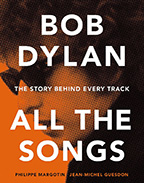
Bob Dylan All the Songs: The Story Behind Every Track by Philippe Margotin and Jean-Michel Guesdon


An entertaining and informative track-by-track retrospective
The substantial coffee table book Bob Dylan All the Songs lives up to what its title claims. French authors Philippe Margotin and Jean-Michel Guesdon discuss each and every song from Dylan’s prolific output of studio albums. I have the first edition (with a red cover) published in 2015, which covers Dylan’s recordings through Shadows in the Night. In January of 2022 a second expanded edition (with yellow cover) will be released that updates the coverage through his 2020 album Rough and Rowdy Ways. I believe this was the second All the Songs book compiled by Margotin and Guesdon, following a volume on the Beatles. They have since produced a whole series of such books on several classic rock bands including the Rolling Stones, Pink Floyd, and Led Zeppelin.


Each of the book’s chapters is devoted to one of 36 Dylan studio albums, presented chronologically. Each chapter begins with an introduction on the making of the album—how it was written, recorded, and what was going on in Dylan’s life at the time. This is followed by a few paragraphs of discussion about each song. The authors shed light on the inspiration for the song, older folk songs that influenced it, the meanings of the lyrics, the musicians who accompanied Dylan, and other production details. Only studio albums from the official Dylan canon merit a chapter. Live albums and the Bootleg Series do not, but previously unreleased selections from the Bootleg albums are included for discussion as outtakes of the albums for which they were originally intended. Odds and ends like isolated non-album singles and movie soundtrack songs are also covered. Each song is only discussed once, so alternate takes do not get their own entry.

Though commendably comprehensive, all albums and songs are not granted equal coverage. Dylan’s first ten albums take up about half the book, while the following 26 records occupy the second half. Even so, Margotin and Guesdon pay respectful attention to albums that many Dylan critics consider terrible or insignificant. The gospel trilogy in particular is reviewed positively and treated thoughtfully, with the authors demonstrating a thorough knowledge of Dylan’s biblical references. They also give due credit to Dylan’s recordings of the ‘80s, instead of, like so many critics, merely bemoaning the fact that they don’t measure up to the glory days of the ‘60s.

This book delivers a very entertaining and educational retrospective of Dylan’s career. It was fun to read a chapter, listen to the album, read the next chapter, listen to that album, and so on. Although occasional song entries come across as vague or conjectural, overall the authors provide much informed and insightful detail, going far above the common knowledge of the casual Dylan fan. The songs are not discussed in as great a level of detail as in Derek Barker’s The Songs He Didn’t Write or Michael Gray’s Bob Dylan Encyclopedia, but the former only discusses Dylan’s cover songs and the latter only singles out his “important” songs. Margotin and Guesdon cover everything. One annoying aspect of Margotin and Guesdon’s song reviews, however, is that they feel compelled to point out the “mistakes” in each song, such as Dylan sings a plosive at 1:56 or the buttons of Dylan’s jacket hit his guitar at 2:32. Who cares? If you’re a Dylan fan, you probably don’t.


The hardcover edition is attractively designed with many photos, making for enjoyable browsing. The main attraction of this book, however, is the detailed examination of Dylan’s songs, and one can appreciate Margotin and Guesdon’s insights just as well through the ebook edition.

If you liked this review, please follow the link below to Amazon.com and give me a “helpful” vote. Thank you.

Monday, December 13, 2021

The Trail of the Lonesome Pine by John Fox Jr.


Appalachian romance outdated in a bad way
The Trail of the Lonesome Pine
bears a title that makes it sound like a Western, but the story takes place in the Appalachian world of coal miners, moonshiners, and hillbilly feuds. Originally published in 1908, the novel by John Fox Jr. is set in a mountainous region on the border between Kentucky and Virginia. John Hale, a college-educated entrepreneur, ventures into this country looking for undiscovered coal beds to exploit into a lucrative career. He discovers his hoped-for mother lode in a secluded hollow called Lonesome Cove. As an outsider, Hale is looked at with suspicion by the region’s inhabitants, but he manages to get involved in the lives of one family in particular. Two local clans, the Tollivers and the Falins, have been engaged in a long-running feud, the kind in which any traveling man might be shot and killed in the woods without warning. As Hale and other speculators begin to develop the mineral resources of the region, the next logical step is the establishment of a boomtown. To protect his investments, Hale founds a police force to maintain law and order in the region, which draws the ire of the locals who resent the “furriners” who have intruded upon their homeland and meddle in their lives.

Just as in any horse opera, West or East of the Mississippi, the dynamics of a feud and the ubiquity of guns offers the potential for some exciting drama and adventure, but Fox never truly realizes the potential for action that the premise allows. All throughout the narrative a showdown between the hero and his nemesis is foreshadowed, but the reader ends up feeling cheated when the confrontation never reaches fruition. It is also difficult to get excited about the commercial side of the story. Unless you’re a geologist or a coal miner, it is hard to understand the plot elements revolving around Hale’s mining enterprises.

Rather than feuding hillbillies or coal riches, however, the bulk of the novel revolves around a romance between Hale and a girl he meets in Lonesome Cove. In this case, “girl” is the appropriate word to use because June Tolliver is literally a schoolgirl when first encountered by Hale. Like some Kentucky backwoods Pygmalion, Hale supervises June’s upbringing, pays for her education, buys her a home, and initiates her education into big-city culture and fashions. All along he intends to marry her, but first he must transform her into a woman worthy of being his wife. In the time and place in which this novel takes place it probably was not unusual for girls to be married at a young age, perhaps even in their early teens. Nowadays, however, what Hale is doing with June would be called “grooming,” and it leaves a bad taste in the reader’s mouth. The hillbillies of Lonesome Cove may not have known any better, but Fox, a Harvard-educated New York journalist should have thought twice before penning what comes across as a pedophilic My Fair Lady sexual fantasy. If Hale and June were closer in age this would just be a dull and corny romance novel, but the repeated referrals to June as a “little girl” are a constant reminder that he is acting as her svengali. On the surface this is an innocent romance in an idyllic woodland setting, which probably explains why this book is regarded in come circles as a beloved classic, but it’s hard to understand how anyone could let this story premise slide in the 21st century.

The basic plot of the book, its local color, and Fox’s descriptions of the natural landscape call to mind a harmless and wistful Western by Zane Grey, but the grooming aspect of the lead couple’s relationship has lain a patina of creepiness over this outdated Appalachian yarn.
If you liked this review, please follow the link below to Amazon and leave me a “helpful” vote. Thank you.
https://www.amazon.com/review/RMUF89RZSIEMM/ref=cm_cr_srp_d_rdp_perm

Monday, December 6, 2021

Hordubal by Karel Capek


Compelling psychological drama of Czech rural life
For his spearheading of early 20th-century modernism, Karel Capek (1890-1938) is one of the most important figures in Czech literature. English-language readers will probably know him best as the writer who introduced the word “robot” to the world in his 1920 play R.U.R. (Rossum’s Universal Robots). Capek’s novel Hordubal was published in 1933. It is the first in a trilogy of thematically connected novels—followed by Meteor and An Ordinary Life—often referred to as the Noetic Trilogy. In English, this trilogy of novels is found together in one volume entitled Three Novels, translated by M. and R. Weatherall and first published in 1948.


As the novel opens, Juraj Hordubal is leaving America to return to his homeland, where he owns a farm in the Carpathians. He has spent the last eight years working as a coal miner and sending most of his earnings home to his wife and daughter. Having communicated with his wife only sparsely during his absence, Hordubal has given her no warning of his arrival, yet he nostalgically expects all at home to be just as he left it. His wife is understandably shocked when he shows up unannounced. Rather than pining away for her husband, Polana Hordubalova has been running the family farm successfully with the help of a hired man named Stepan Manya. Polana and Manya’s ideas on profitable agriculture clash with those of Hordubal, who is set in his ways with old-fashioned notions of bucolic life. As a result, in the management of his own property, Hordubal is made to feel like an ineffectual and unwanted interloper.

In personal matters, Polana treats Hordubal more like a stranger than a husband. Not surprisingly, it is hinted that Polana and Manya were lovers during her husband’s absence. Despite all the signs pointing in that direction, Hordubal either fails to ascertain the romantic relationship or deliberately denies it so as not to face up to the fact. Gossip among the neighbors eventually forces him to address the issue, causing conflict between the three parties concerned.

The narrative of Hordubal is related partly through third-person prose and partly through Hordubal’s first-person interior monologue, the two voices alternating seamlessly. As the reader gets to know the characters and become intimately involved in their lives, the story becomes more and more addictive. Despite the deceptively mundane milieu of rural life, each chapter manages to conclude with what feels like a psychological cliffhanger, leaving the reader anticipating what comes next. The suspense culminates in a shocking turn of events in the novel’s latter half. Capek’s storytelling has some of the deadpan objectivity of Franz Kafka’s The Trial or Albert Camus’s The Stranger, as if the characters are but guinea pigs in a philosophical experiment, their fates at the mercy of an indiscriminate universe. What makes this novel different, however, is the pathos and warmth one feels for Juraj Hordubal himself, who comes across as a much more likable and human character than Camus’s existential hero Mersault.

The “noetic” aspect of Capek’s Noetic Trilogy has to do with epistemology—the branch of philosophy that concerns how humans think and know. I won’t know what to say about that aspect of the novel until I’ve read the other two books in the series, which I fully intend to do. Regardless of Capek’s theories on epistemology, I just found Hordubal to be a very compelling story, one I was reluctant to put down until reaching the very end.
If you liked this review, please follow the link below to Amazon.com and give me a “helpful” vote. Thank you.
https://www.amazon.com/review/R32DVS9ZZ88LD/ref=cm_cr_srp_d_rdp_perm