Showing posts with label Canadian. Show all posts

Monday, July 20, 2026

My Life with the Eskimo by Vilhjálmur Stéfansson


Traveling to hunt, hunting to travel
Vilhjálmur Stéfansson (1879–1962) was a Canadian-American explorer and ethnographer. He was born in Manitoba, the son of Icelandic immigrants. Shortly after his birth, his family moved to the Dakota Territory of the United States. He was educated at the universities of North Dakota, Iowa, and Harvard. As an explorer, his area of interest was the Arctic, and as an ethnographer, his expertise was the Inuit or Eskimo (the former is the more proper term, but the latter was more widely used in Stefansson’s lifetime). From 1908 to 1912, Stéfansson lived among the Eskimo on the north coast of Alaska and Canada, studying their ways and collecting artifacts and data for the American Museum of Natural History, which afterwards published his scientific findings. In 1912, Stéfansson also published a popular account of his expedition, intended for general readers, entitled My Life with the Eskimo. At that time, Stéfansson’s more than three year sojourn in the frozen North was the longest Arctic expedition on record.

But did he use all that time wisely? If this book were all you had to go on, it wouldn’t seem so. Stéfansson’s stated aim was to travel eastward to find bands of Inuit who have previously had little or no contact with White people. He bounces around the Alaskan coast for two years, however, and 162 pages of the book go by before he even gets started towards that goal. Even then, the book makes it unclear what exactly he’s trying to accomplish. The bulk of the text is about hunting caribou and seals. Stéfansson needs to hunt to feed himself, his assistants, and his sled dog team. He travels hundreds of miles to shoot the food necessary to travel hundreds of more miles to shoot more food to travel hundreds of more miles, and so on. Almost every animal they see, they kill, either for the meat, the skin, or as a specimen for the AMNH. Also a member of the expedition is a zoologist named Dr. Anderson, but he and Stéfansson are never in the same place, and the two are constantly traveling hundreds of miles to look for one another.

While all this is going on, Stéfansson is conducting scientific research, but he doesn’t tell you much about it. He’ll say, “I collected folklore from the people in this village.” That’s great. Would you like to tell us a little about that? No, let’s get back to another hunting story. Not until after page 360 does he finally discuss some of the archaeological digs, ethnological research, and linguistic studies that he conducted. These topics, much more interesting than all the caribou hunting, are relegated to the last few chapters of the book, treated as if they were appendices. If the entire book were more like these last 70 pages, My Life with the Eskimo would have been a much more satisfying read.

Reminiscent of another popular expedition narrative, Thor Heyerdahl’s Kon-Tiki (1948), Stéfansson also has an ethnological thesis to argue in My Life with the Eskimo. In his travels, he encounters what he calls “Blonde Eskimo”—Inuit with light hair, light skin, and blue eyes. Stéfansson theorizes that these may be the descendants of Danish and/or Norwegian settlers who disappeared from the west coast of Greenland centuries ago and perhaps drifted westward. Unlike Kon-Tiki, Stéfansson does not belabor the point. This theory is not the book’s raison d’etre, just one matter discussed among many. Though Stéfansson’s hypothesis of the Blonde Eskimo’s Norse origins does not seem so farfetched, as with Heyerdahl’s theory, 21st-century DNA testing has since disproved it.


I read quite a few explorer memoirs, and this one is just mediocre. Stéfansson is clearly very knowledgeable about the Inuit, but writing for the general public does not seem to have been his forte. Again, the last 70 pages of this book are quite good, but up to that point there’s a fair amount of boredom between nuggets of interest.

Friday, January 23, 2026

Sunshine Sketches of a Little Town by Stephen Leacock


Small-town humor from a Canadian Mark Twain
Stephen Leacock was a popular Canadian author who publish many books of fiction, humor, and essays in the early 20th century. Though not much known south of the border, he is a household name in his native Canada. One of his most popular works is Sunshine Sketches of a Little Town, published in 1912. The book is a series of stories set in Mariposa, a small town in Southern Canada, presumably in Ontario (because the Maritime Provinces are mentioned as a separate entity, and no one in Mariposa is French). Mariposa may be based on Leacock’s memories of his own hometown, Orillia, Ontario, but he stressed that the locale is a fictional amalgamation of many small towns in Canada.

Is Sunshine Sketches a collection of short stories or a novel? It’s a little of both, but I think it leans more towards the latter. The stories build on one another, so they should be read in order, and sometimes a story arc will be spread over two or three chapters. In form and structure, it can be easily compared to Sherwood Anderson’s Winesburg, Ohio. Sunshine Sketches is not a modernist work, however. There are no traces of Winesburg’s Freudian themes, nor will you find the cynicism of Sinclair Lewis’s depictions of small-town life. Leacock makes fun of the citizens of Mariposa, but he’s not laughing at them; he’s laughing with them, as if he counts himself among them. He writes in a style of jovial, old-fashioned storytelling along the lines of Bret Harte, with plenty of humor that calls to mind Mark Twain. Leacock, in fact, won a Mark Twain Medal in 1935 (awarded by the International Mark Twain Society). Nowadays, while the United States has a Mark Twain Prize for American Humor, inaugurated in 1998, Canada has a Stephen Leacock Memorial Medal for Humor, first awarded in the 1940s.

Leacock’s stories of Mariposa are indeed funny, sometimes hilarious, and as charming as you would expect from a book with the title of Sunshine Sketches. The tone is very light. Occasionally you’ll find the melancholy mention of a lost loved one, but there are no dark themes here. Even when Leacock dwells on suicide, he manages to find humor in it. The reader quickly becomes enamored with this little town and gets emotionally involved in the characters’ lives. Leacock profiles Mr. Josh Smith, the portly and successful hotel keeper, Jefferson Thorpe, the barber with a shrewd knack for investments, and Reverend Drone, minister of the Anglican Church. Mr. Pupkin, the bank teller, courts Ms. Zena, the judge’s daughter. The Mariposans gather for a boat outing on Lake Wissanotti, engage in a fundraising campaign for the local church, and turn out in droves on election day. In all cases, these events turn out unexpectedly and with humorous consequences.

If you’ve ever traveled through rural villages in Southern Ontario, it’s easy to imagine a picturesque life similar to what Leacock depicts in Mariposa. Of course, such ideas are partially based on preconceived bucolic and idyllic storybook stereotypes. Leacock plays up to such notions but subverts them with wry and affectionate humor. I grew up in a small town in Wisconsin, and I had no trouble identifying with Leacock’s Canadian characters. I suspect that my hometown, in the time of my grandparents’ generation, was probably a lot like Mariposa. I imagine many Canadian students probably read Sunshine Sketches in school, but there’s no reason why this enjoyable book should be confined to an audience of Leacock’s countrymen. American readers should definitely check it out for a fun and enchanting read.

Thursday, June 26, 2025

The Master of Jalna by Mazo de la Roche


Hard times on the family farm
The Master of Jalna
, published in 1933, is the fourth book of 16 in Canadian author Mazo de la Roche’s series of Jalna novels (the fourth novel to be published but the tenth novel in the Jalna chronology, because of all the prequels). These books take place mostly in rural Southern Ontario, along the shores of Lake Ontario. The Jalna novels are in the family drama genre, much like Louisa May Alcott’s Little Women series, Laura Ingalls Wilder’s Little House on the Prairie books, or the old TV show The Waltons. Sometimes the Jalna books venture into romance novel territory, but like the aforementioned examples, they can’t really be classified as romance novels. The family that stars in these books is the Whiteoaks. Their farm is named Jalna. The “Master” in this case is Renny Whiteoak, the eldest brother who manages the farm (The parents died prior to the first novel). As this novel opens, Renny is now married to his brother’s ex-wife, and they have a toddler daughter.

While the last Jalna novel, Finch’s Fortune, ventured as far as England, this installment in the series takes place entirely on the Jalna estate or its near environs. Wayward brothers Finch and Eden have returned from Europe to the family manor, wherein resides the Whiteoak siblings and their spouses, children, elderly aunt and uncles, and a few servants. The family’s circle of friends is limited, which means just about any woman the Whiteoak brothers meet is a potential mate. The dramatic events in this book are the universal dramas of many families: marriages, births, illnesses, deaths, funerals. This novel also brings in the element of financial hardship. The Whiteoaks are land-rich but cash-poor, and Renny, in his role as manager of the farm, is having trouble making ends meet. The family might have to sell some of its beloved acreage. It’s kind of hard to take such financial woes seriously, however, considering that this large family owns a lot of property, few of them work, and they always seem to indulge in lavish feasts of food and drink. A couple of the family members are actually borderline wealthy. The Whiteoaks have never been filthy rich, but they enjoy a prestige as a founding family of the region. Because of this, they often come across as having an inflated sense of pride and entitlement, particularly the elder generation.


Whether intentional or not, masculinity is a recurring and overt theme in these books. De la Roche uses the Whiteoak brothers to compare and contrast competing conceptions of masculinity. I expanded on that in my review of Finch’s Fortune, so I won’t go into it too much here. Though a woman herself, and possibly a lesbian, de la Roche really doesn’t give equal time or importance to her female characters. As the title indicates, Renny is the main focus of this book. He’s always seemed to be the author’s ideal of a man’s man. His marriage is far from ideal, however, as he and his wife Alayne are positively rude to each other throughout the book. Alayne was depicted sympathetically in earlier books, but her she’s just a constant whiner.


Much like a television series, the pleasure of the Jalna books comes from just seeing what these familiar characters are up to, even if it’s nothing earth-shattering. The other main attraction here is the atmosphere. These novels take you back to a wholesome, idyllic time and place in Canadian history. I recently made a visit to the Niagara region of Southern Ontario, where the farms extend right up to the shore of the great lake. Nowadays, this countryside is mostly occupied by wineries and tourism, but driving through the area it’s not hard to imagine what Jalna might have been like a century ago. The storytelling in these books is almost an afterthought, and mostly predictable. The first novel, Jalna, is quite good. The second and third books, however, did not impress me much. I’m glad I hung in there for this fourth novel though, because The Master of Jalna is an improvement over the last couple installments.

Wednesday, May 7, 2025

The Black Hunter by James Oliver Curwood


Chivalric romance in the French and Indian Wars
James Oliver Curwood (1878–1927) was a Michigan-born writer who built a successful career writing popular wilderness adventure novels along the lines of Jack London. Many of Curwood’s books are set in Alaska or the Yukon, and some feature canine protagonists, much like London’s The Call of the Wild, White Fang, or Jerry of the Islands, among others. Curwood’s 1926 novel The Black Hunter, however, is a dog of a different color. This is a historical novel set in Quebec during the French and Indian Wars of the 18th century.


The story takes place in 1754 and 1755. David Rock is a young man who lives in the Valley of the Richelieu, a rural area in Southwestern Quebec. Though of English extraction, David lives in New France and is loyal to the French crown. He comes from a poor family and spends much of his time hunting in the nearby forests. His girlfriend, however, is loaded. Anne St. Denis, the daughter of a seigneur, lives in the local chateau. She and David have known each other since childhood and intend to marry. When some bigwigs from Quebec City come to visit Anne’s father, they insult the rustic David, and he responds by throwing two of them into a fountain. Since one of his victims is a high government official—François Bigot, the Intendant of New France—David is sentenced to a flogging. Bigot, however, at the advice of his cronies, pardons David of the sentence. What Bigot really wants is to hook up with the lovely Anne, and he figures he has a better chance of working his way into her heart (or rather her dress) if he is nice to her boyfriend rather than torturing him. The wily Bigot then takes the suspicious David under his wing, offering him a promising career in Quebec, much to the joy of Anne.


When I saw that this novel is set in “Old Quebec,” I expected a lot of backwoods Canada adventure typical of Curwood. Instead, Curwood’s depiction of Canada (New France) feels more like medieval Europe. This is mostly a courtly drama of romance and honor, somewhat along the lines of a Sir Walter Scott novel such as Ivanhoe, except that the good-versus-evil, damsel-in-distress triangle in this storyline is about as formulaic as the cartoon adventures of Dudley Do-Right, Nell Fenwick, and Snidely Whiplash. The book defies believability in the lengths that the villains go to pretend they are David’s friends and benefactors. In reality, if a powerful man of the 18th century wanted a helpless woman, he would probably use more barbaric methods rather than go to such sly lengths, but this is fiction not history, and that wouldn’t make much of a novel.


Most of the characters in the book, including Bigot, are real figures from Canadian history. Even the Black Hunter is a figure of local legend. He is a White man with black hair and black clothes, a nomadic backwoodsman with mythical skills as a hunter and warrior, like a cross between the Outlaw Josey Wales and James Fenimore Cooper’s Natty “Hawkeye” Bumppo. While David is the star of the book, the Black Hunter is a supporting character who barely appears in the book.


Only in the last quarter of the book does Curwood really dive into the French and Indian Wars, but that is the best part of the book. He has clearly done his research, and the brutality and gore of the final chapters belies the genteel chivalric tone of what came before. The treatment of Native Americans in the book is complicated. They are depicted largely as savage killing machines, but it is acknowledged that they have been made so by the English and French, with bounties and booze, who use the Indians for their own selfish ends. If Curwood had concentrated more on the wars and the Whites relations with the First Nations, it would have been a better book. Instead, you have to wade through an awful lot of wholesome romance and courtly intrigue to get to the good stuff. Nevertheless, the novel is fine overall and one of Curwood’s better efforts.

Friday, February 7, 2025

Indians of the Northwest Coast by Philip Drucker


Commonalities and diversity among Native peoples of the region
In the early and mid-20th century, the American Museum of Natural History published a series of books called Anthropological Handbooks. I’ve never been able to find a complete list of the books in this series, but I have found a few volumes available for free download online. Indians of the Northwest Coast by Philip Drucker, an anthropologist with the Smithsonian Institution’s Bureau of American Ethnology, is number 10 in the Handbook series and was published in 1955. My interest in the Northwest Coast Indians began with a love for their beautiful art, and trips to Alaska and British Columbia in recent years have heightened my curiosity about their culture, beliefs, and lifestyle.


In books related to history, archaeology, or anthropology, when I see the word “Handbook” in the title, it leads me to expect an overview suitable for general readers. This book is indeed an overview, but it’s hard to say who the intended audience is. It definitely requires the reader to have some foreknowledge of anthropological concepts and subject matter. There is a discussion here about blanket weaving, for example, for which the reader is expected to be familiar with the techniques and technical terminology of Native American hand weaving. In general, the text of this book reads as if it were meant to provide a general overview of the Northwest Coast Indians to anthropologists who specialize in some other region or culture.


The information is organized into categorical chapters on material culture, economy, social structure, religious beliefs, rites and ceremonies, and art. Rather than emphasizing the characteristics and customs common to the various Native peoples of the Pacific Northwest—the Tlingit, Haida, Coast Tsimshian, Bella Coola, Kwakiutl, Nootka, Coast Salish, and more—Drucker spends more pages pointing out the differences between these groups and the many subdivisions thereof. After introducing a practice common to many Northwest Coast peoples, such as matrilineal social organization, dancing societies, or potlatches, Drucker is then obliged to elaborate with a list of all the exceptions to what he just said. The result is a survey in which it’s very hard to see the forest for the trees. I have no issue with the facts presented, only the way those facts are presented. This would be a good reference for seeking specific details, but overall it’s hard to form a vivid glimpse into what Native life was like on the Northwest Coast. Much of this discussion of tribal differences—the Tlingit did this; the Haida did that—could be better accomplished through charts and tables, but few are included. The book is amply illustrated, however, with black and white photographs.


If your primary interest in the Northwest Coast Indians is their art, this book provides a chapter on the subject, but there are better and more colorful books on that topic, such as Bill Holm’s Northwest Coast Indian Art. At the time Drucker wrote his book, there were few Native artists practicing in the Northwest. Since then, thankfully, a number of Native artists have revived the techniques of their forefathers and continue to create compelling art. From this book, I was hoping for more of an understanding of the philosophy behind that art. The popular conception of these Indians nowadays is that they are a peaceful, egalitarian people living in harmony with nature. Readers may be troubled by Drucker’s revelations of historical practices like slavery, cannibalism, and a rather petty obsession with materialism. Although Drucker clearly has great respect for the Indians of the Northwest Coast, this is an old-school anthropology book written by a white ethnographer without any perspective from the Natives themselves, which today would be frowned upon. There is a lot to learn from this book, but there have surely been more comprehensive and accessible surveys of the subject published since.

Monday, October 28, 2024

Star Trek Movie Memories by William Shatner and Chris Kreski


The conflicts and compromises behind the film franchise
Star Trek Movie Memories was published in 1994, just after actor William Shatner ended his career as Captain Kirk in the Star Trek franchise. This book is the sequel to Star Trek Memories, published the preceding year, in which Shatner recounts the making of the original Star Trek television series. In Star Trek Movie Memories, Shatner provides his behind-the-scenes perspective on the making of the six Star Trek feature films featuring the original cast, as well as the Star Trek: Generations film, in which he made his final appearance as Kirk along side The Next Generation cast. Both books were cowritten by Shatner and Chris Kreski, a former television writer.


Much like the volume that preceded it, Star Trek Movie Memories is not so much a collection of personal anecdotes of Shatner and his costars, but rather a production history of these seven Star Trek motion pictures. In addition to Shatner’s recollections, Shatner and/or Kreski interviewed many of the cast and crew to get their side of the story. Leonard Nimoy’s voice is once again quite prominent in this volume. In many ways, Nimoy had a more active creative role than Shatner in the building of the film franchise, and Shatner gives his old friend credit where it is due.

When comparing the two Memories books sheerly on the basis of subject matter, the making of movies in the 1980s is not nearly as interesting as the making of a groundbreaking sci-fi television series in the 1960s. Much of the text in this Movie Memories volume has to do with battles over script changes, contract negotiations of the actors and writers, and meddling by Paramount studio executives. This second book, however, does include more personal reflections from Shatner, and it reads more like it was written in Shatner’s voice. There is a touching chapter in which he describes the hard times in his career between the end of the television series and the beginning of the movie franchise. He also talks about his marital problems and his relationship with his daughters. Shatner closes the book with a candid examination of his coming to terms with the bittersweet feelings engendered by the death of Kirk and the end of his involvement with Star Trek.

It still feels, however, like Shatner is holding back a bit for diplomacy’s sake, particularly in regards to his castmates. It’s common knowledge that there has been some bad blood between the fictional captain and his crew over the years, but Shatner has a tendency to focus on the bright and sunny side of their relationships. He mentions at one point, for example, that James Doohan and Walter Koenig held a grudge against him, which made their joint participation in Generations difficult, but he never reveals the history behind that animosity. No longer does Shatner hold back on Gene Roddenberry, however, who was duly credited in the first book for his creation of Star Trek but is portrayed as the nemesis of the Star Trek franchise throughout this second book.

Reading Shatner’s first Star Trek Memories book made me want to go back and watch the original television series. Likewise, Star Trek Movie Memories inspired me to binge-watch the six original-cast motion pictures. Like a good DVD commentary, this book proved to be a valuable companion volume to the film series. Star Trek Movie Memories is not always as exciting or as forthright as the reader might hope, but like its predecessor it is a very informative book and a welcome trip down memory lane for even casual Star Trek fans. You don’t have to be a Trekkie zealot to enjoy it.  

Monday, March 18, 2024

Star Trek Memories by William Shatner with Chris Kreski


More of a TV production history than a personal memoir
Star Trek Memories
was published in 1993, after the completion of the sixth Star Trek motion picture, the last to focus exclusively on the original Star Trek cast. Seeing his career as Captain Kirk coming to an end, Shatner felt inclined to wax nostalgic by publishing his recollections of the making of the original Star Trek television series. A sequel published the following year, Star Trek Movie Memories, covers the making of the film franchise. I’m not a Trekkie who obsesses over all the trivia on each episode, but I do enjoy the show, and I like Shatner.


Star Trek Memories is packaged like a Shatner memoir, but that’s not really what it is. This is a behind-the-scenes history of the production of the first Star Trek television series. It begins with Gene Roddenberry’s childhood, and ends in 1968 with Star Trek’s cancellation after three seasons. Shatner doesn’t even get involved with the series until a quarter of the way through the book. Although there are plenty of first-person interjections, this doesn’t really read like it was written in Shatner’s voice. One suspects coauthor Chris Kreski had a heavy hand in this. If you are expecting a lot of secrets and gossip about the cast of the show, you’re not going to find much here. The crew actually gets more coverage than the cast. You learn more about the set decorator and the script editor than you do about any of the actors, with the exception of Leonard Nimoy. He gets a fair amount of ink, even more than Shatner himself. The rest of the cast members pretty much get one good anecdote each. There are several tales of practical jokes among the cast and crew that strike the reader as being surprisingly unfunny, and in some cases just mean.

The refreshing thing about this TV memoir is that it’s not just a relentlessly positive lovefest for the show or a pat-on-the-back “look what we accomplished” story. There is a surprising amount of negative criticism of the show and the people involved with it, including some directed towards Shatner himself. It is forthrightly acknowledged that while some of the Star Trek episodes are masterpieces, quite a few are terrible schlock. The book recounts the constant struggles between the Star Trek production team and its parent studio, who demanded that this ambitious science fiction program be made under a paltry budget. The network also often interfered in the creative direction of the show by censoring stories, pushing for dumbed-down content, and trying to shape the characters to their liking. At the beginning of the book, Gene Roddenberry is portrayed as a veritable saint, but by the end of the narrative he has morphed into a sort of villain. His widow was still alive when the book was published, however, so one gets the idea that Shatner and Kreski had to hold back on any unflattering revelations of the Star Trek creator.

This book is kind of like reading a rock and roll autobiography where the star doesn’t talk much about his famous bandmates but instead says more about his manager, publicist, lawyer, and accountant (I’m looking at you, Pete Townshend). This book wasn’t quite what I expected, but I found it all very interesting nonetheless. Star Trek was first broadcast shortly before I was born, but I did grow up on old-school television, back when there were only three networks. This book gave me a good idea of how shows were made in those days, for better or for worse.  
If you liked this review, please follow the link below to Amazon.com and give me a “helpful” vote. Thank you.

Friday, February 2, 2024

Northwest Coast Indian Art: An Analysis of Form by Bill Holm


An informative style guide to a sophisticated Indigenous art form
The Native Americans (or First Nations, as Canadians would say) of the Northwest Pacific Coast of North America developed a beautiful artistic style that is still actively practiced by artists of the region, as evidenced in everything from totem poles to jewelry to modern lithographic prints. What makes this art so attractive and intriguing is the unique formal language of sinuous, undulating lines, and the composite, interconnected imagery of animal and human forms that’s instantly recognizable as common to this particular region. University of Washington art historian Bill Holm set out to establish a code of formal guidelines endemic to the Indigenous art of the Northwest Coast. He accomplished this by analyzing roughly 400 works in different media and quantitatively calculating statistics of form, color, and design to draw conclusions about the universal characteristics of this aesthetic language. Holm clarifies that he is specifically examining the art of five nations that he considers produce the purest examples of this art form: the Haida, Tlingit, Tsimshian, Bella Bella, and Bella Coola peoples. Holm’s book Northwest Coast Indian Art: An Analysis of Form was first published in 1965 by the University of Washington Press.


I read their 50th Anniversary Edition, published in 2015. This is really a beautiful book. Even though it’s just a slim paperback, it has the luscious quality of a coffee-table art tome. Graphic designer Thomas Eykemans deserves commendation for his composition and layout of this book. (I also design books for a university press, and this book makes me envious.) The photographs are all high quality, the illustrations are very well executed, and the book is beautifully printed.

The text by Holm, on the other hand, isn’t quite as pleasurable. His writing often reads with the dryness and abstrusity of a geometry textbook but without the mathematical precision. Holm may have been the first to write down the aesthetic rules for this art form, but I’m not sure how useful the guidelines he’s established will really be for artists attempting to learn this visual language. A lot of Holm’s statements are just obvious generalities that anyone could make by observing several pieces of Northwest Coast Indian art—the curvilinear forms and the use of ovoids, for example. Holm also phrases a lot of his aesthetic assessments in the form of “Some artists do this; some artists do that,” which doesn’t really provide any useful definitiveness either. Holm’s greatest contribution is his revelation that two-dimensional Northwest Coast art is made up of a primary formline, secondary forms, and tertiary forms, all of which must be balanced in their own right before working together as a cohesive whole. These levels of form also correspond to the three main colors employed: black, red, and blue-green. The book includes some very good diagrams that illustrate this concept well. Holm never discusses the meaning of the imagery in these artworks, such as the animal or human forms depicted. For artists looking to practice or learn from this art form, I think a better instructional manual would be Hilary Stewart’s Looking at Northwest Coast Indian Art.

The strength of Holm’s book is its instructive illustrations and diagrams. The design and full-color printing also make it a more visually attractive volume than Stewart’s book. Though I’ve expressed reservations about Holm’s writing, if you’re really interested in Northwest Coast Indian art, this is a book you should own. It’s not a huge coffee table book, so it’s not going to set you back a lot of money, and with the paperback price you’re certainly getting your money’s worth.  
If you liked this review, please follow the link below to Amazon.com and give me a “helpful” vote. Thank you.

Thursday, June 8, 2023

Weapon X: The Return Omnibus by Frank Tieri, et al.


They’ll let anyone into this club
Weapon X: The Return Omnibus
is a mammoth hardcover tome compiling about 50 issues worth of Marvel Comics. This includes the entire 28-issue Weapon X series that began in 2002, as well as several related issues of Marvel’s Wolverine and Deadpool titles. Most of these issues were written by Frank Tieri; the artists vary. In the Marvel Universe, Weapon X is the name of a Canadian government program that experiments on mutants to transform them into ultimate killing machines. This is how Wolverine got the adamantium grafted onto his skeleton. In Weapon X: The Return, that clandestine project resurges under a new director who enlists many mutants into the program by offering them enhanced powers. Wolverine, however, wants no part of the new Weapon X and works to shut it down.

The original Weapon X story appeared in 1991 issues of Marvel Comics Presents. This Wolverine origin story, written and drawn by Barry Windsor-Smith, is one of Marvel’s masterpieces. As a sequel to that saga, Weapon X: The Return doesn’t measure up to the classic upon which it is built. At first, Wolverine was the only Weapon X experiment that we knew about. Over time, however, it was revealed that Sabretooth and several others were also products of the Weapon X program, and with Wolverine they comprised a CIA covert ops team. That made for a pretty good storyline also. Over time, however, Marvel writers couldn’t resist adding more heroes and villains to the Weapon X fold. In doing so, Weapon X devolved from an exclusive team of elite killers to a club that will pretty much let anyone in, no matter how obscure of a superhero they may be. Here in Weapon X: The Return, for instance, three of the main characters are Marrow, Chamber, and Aurora, who I’m not sure even qualify as C-team Marvel heroes. As a result, the name Weapon X doesn’t mean what it used to. It’s now just another alternative SHIELD for antiheroes, like so many others that Marvel has introduced in the last few decades.

The story is rather repetitive. It seems like everyone’s always hunting Sabretooth. Then he shows up, kills somebody, and disappears, so everyone’s hunting him again. The director of Weapon X and his second-in-command continually wrestle for control of the program, and it bounces back and forth between them like a tennis ball. The last five issues of the book are from a miniseries called Weapon X: Days of Future Now, which is one of those possible future stories that turns into a What If alternate reality where you have the pleasure of seeing many hallowed Marvel heroes get killed. As a time travel story, however, it doesn’t make a whole lot of sense, and it’s a rather inconclusive way of ending this 50-odd issue story arc.

The art is a mix of good and bad. No creator credits appear amid the comics themselves, only a one page list of artists at the front of the book, so it’s hard to even recall who drew what. Personally, I’m not a big fan of Marvel’s twenty-first century style. I think the influence of manga, along with digital coloring, has resulted in a lot of stylized figures that look like plastic dolls. No matter how gory or risqué the story, more often than not the art just looks like a children’s book. I remember when Neal Adams drew Sauron back in X-Men #60, he looked like a horrifying creature. In these newer comics, however, Sauron looks like a Saturday morning cartoon designed for a toy tie-in. In terms of both story and art, Weapon X: The Return Omnibus is a big book loaded with mediocre work. You can almost hear Barry Windsor-Smith rolling his eyes in disgust.
If you liked this review, please follow the link below to Amazon and leave me a “helpful” vote. Thank you.

Monday, June 5, 2023

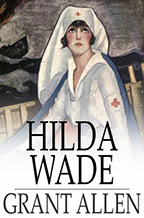
Hilda Wade by Grant Allen


A mansplainer’s half-baked idea of “women’s intuition”
Hilda Wade
was published in 1900, shortly after the death of its author, Canadian-British writer Grant Allen. On his deathbed, Allen received some assistance in the completion of the novel from his friend and neighbor Arthur Conan Doyle. The two seem like an odd couple of pals since Allen was an atheist and skeptic, while Conan Doyle was so heavily into spiritualism. Nevertheless, they must have had a strong friendship. Any finishing touches Conan Doyle may have made to the manuscript are undetectable; the book reads like it’s all Allen. By the standards of his time, Allen was a liberal thinker, and he often wrote fiction that promoted radical ideas like atheism, socialism, and feminism. He was still firmly ensconced in the literary world of Victorian England, however, so any forays he made in those directions were baby steps at best.

Hilda Wade is a single woman who works as a nurse at a London hospital. She deliberately chose her place of employment because she wanted to work with a certain medical genius, Dr. Sebastian. In the first couple chapters, Hilda proves herself an able aid in Sebastian’s medical research. At first the expert physician doesn’t always greet Hilda’s suggestions with approval, but eventually he comes to learn that Hilda Wade is always right. The novel is narrated by Dr. Hubert Cumberledge, who also works with Sebastian, forms a friendship with Hilda, and not surprisingly develops a crush on her.

Similar to earlier works like The Woman Who Did and Miss Cayley’s Adventures, Hilda Wade is a novel with a strong, independent female protagonist who stretches the traditional gender role of the Victorian heroine. Any feminism that Allen intended with the novel is somewhat misguided, however. Like Miss Cayley, Hilda Wade is only allowed her independence until she fulfills her foregone destiny of marriage. Allen also places inordinate emphasis on Hilda’s superhuman power of “feminine intuition,” which sometimes allows her to magically predict the future. How does she use this wonderful power? Well, in one cringeworthy episode early in the book, Hilda asserts that lippy wives are destined to be murdered. Then she doesn’t do anything to save the woman in question from that horrible fate, but rather waits until after the killing to say I told you so.

The first four chapters of the book are really pretty bad. Fortunately, the plot then takes an unexpected twist and the novel evolves into a mystery. It is not, however, a Conan Doyle-style mystery in which clues lead to a revelation. Instead, the villain is revealed early, and from that point on the plot is really more of a cat-and-mouse chase that leads to far-off lands like Rhodesia and India. Allen never really takes full advantage of such exotic locales, however. Overall, Hilda Wade is a rather boring novel in which the possibilities for suspense are squandered and the characters are difficult to care about. In his desire to hold Hilda up as some kind of poster girl for new womanhood, Allen ends up creating a character with about as much depth as a cardboard cutout. In general I prefer Allen’s nonfiction writings to his novels, but even in the latter category, Miss Cayley’s Adventures and An African Millionaire are better than this. In the mystery and suspense department, Allen isn’t in the same league with his buddy Conan Doyle.
If you liked this review, please follow the link below to Amazon and leave me a “helpful” vote. Thank you.
https://www.amazon.com/review/R1WNGQF7ESIYKV/ref=cm_cr_srp_d_rdp_perm

Thursday, September 22, 2022

Strange Stories by Grant Allen


Not strange enough, or strange for the wrong reasons
Strange Stories
, published in 1884, is a collection of short fiction by Grant Allen (1848-1899), a Canadian-British author known for both science writing and fiction. The title would lead one to believe that this is a collection of science fiction or horror tales, but of the 16 selections in the volume only a few dabble in those genres.

To the collection’s detriment, it serves up two reprehensible offerings early on. The first and third selections in the book, “The Reverend John Creedy” and “Mr. Chung,” are both marred by racism. I think Allen was trying to demonstrate that he could be sympathetic to people of color, but in both cases he serves up racist depictions of his title characters. The moral of “The Reverend John Creedy” could best be summed up as “You can take the ‘savage’ out of Africa, but you can’t take the Africa out of the ‘savage’.” “Mr. Chung,” a story about an Oxford-educated Chinese man in England, spends most of its length asserting how barbaric and uncivilized China is compared to enlightened England. The former story is a cautionary tale of interracial marriage, while the latter continually scoffs at the idea of its characters even considering such a blasphemous absurdity. Later in the book, however, another story of interracial courtship is handled much better. Set in Jamaica, “Carvalho” is a romance between a British woman and a Jewish man who is 1/16th Black. Here Allen manages to address the topic of racism without it backfiring on him.


Luckily, from its inauspicious beginnings, there’s nowhere for the book to go but up. Several of the stories are rather mundane Victorian romances or faltering attempts at comedy. The volume’s best selections are those that fall within the genres one might expect from a book entitled Strange Stories. “The Curate of Churnside” is a very good crime story, reminiscent of Edgar Allan Poe, in which Allen takes a unique look at the psychology of a murderer. “Pausodyne” is a sci-fi tale of the mad scientist variety with a clever touch of Rip Van Winkle-style time travel. “The Child of the Phalanstery” is a more serious science fiction story set in a dystopian future that presages later novels like Yevgeny Zamyatin’s We and Aldous Huxley’s Brave New World. “The Empress of Andorra” is a fun political satire in which a government functionary of the tiny nation indulges his delusions of grandeur by attempting world domination. Allen also delivers wry twists on the conventions of the horror genre with “My New Year’s Eve among the Mummies” and “Our Scientific Observations of a Ghost.”

For a collection of short stories by one author, 16 is a lot, and none of these are very short. In fact, most of them are quite longer than they need to be. The first edition of the book was 356 pages, which doesn’t sound like a lot, but it sure feels lengthy when you’re wading through these overly protracted narratives. I considered myself a moderate admirer of Allen’s work before I started this book, but by the time I finished I had had more than I wanted of him. I have to say I prefer his nonfiction writings, as evidenced by books such as The Evolutionist at Large and Biographies of Working Men. The qualities that I admire in Allen—his liberalism, his atheism, his rationalism—are more overtly pronounced and eloquently expressed in his essays than in his short stories. In his fiction, Allen tends to get mired in the worn-out conventions of Victorian literature, even when he attempts to satirize conservative England. You can tell he’s trying to push the envelope, but often that push feels more like a minor nudge. For all his egalitarian rhetoric, he really seems to idolize the British aristocracy to a point where he can’t adequately criticize or lampoon them. I admire Allen as an advocate of science and reason, but my opinion of him as a writer has diminished a bit after reading Strange Stories.


Stories in this collection

The Reverend John Creedy
Dr. Greatrex’s Engagment
Mr. Chung
The Curate of Churnside
An Episode in High Life
My New Year’s Eve among the Mummies
The Foundering of the “Fortuna”
The Backslider
The Mysterious Occurrence in Piccadilly
Carvalho
Pausodyne
The Empress of Andorra
The Senior Proctor’s Wooing
The Child of the Phalanstery
Our Scientific Observations on a Ghost
Ram Das of Cawnpore

If you liked this review, please follow the link below to Amazon.com and give me a “helpful” vote. Thank you.

https://www.amazon.com/review/R9XJ7WJ9MKE75/ref=cm_cr_srp_d_rdp_perm

Wednesday, July 20, 2022

The Technique of the Color Wood-Cut by Walter J. Phillips


Old-school secrets of Japanese artistry from a Canadian master
Color woodcuts has been around for almost two thousand years, but the art from is generally considered to have reached its apex of technical development with the work of Japanese artists beginning in the 17th century. In the late 19th century, European, American, and Canadian artists began to study the Japanese methods of printmaking and bring their techniques to the Western art world. Among these Western practitioners, one of the true masters of the color woodcut was Canadian artist Walter J. Phillips, a printmaker, painter, teacher, and author active in Western Canada from 1915 through the 1940s.

All woodcuts involve carving a design into a block of wood, which is then used to print ink onto paper. Multiple blocks are employed for multiple colors. What sets the classic Japanese style apart from typical woodcuts is the use of semitransparent watercolor inks, applied with brush in a painterly fashion and printed on wet paper. This method allows for very subtle and beautiful color effects, but it is a very exacting process requiring much technical skill and presenting many opportunities for error. Phillips was renowned for his craftsmanship and his sublime renderings of the Canadian landscape. As an expert on the subject and an arts educator, Phillips wrote The Technique of the Color Wood-Cut, published in 1926, to extol the virtues of this challenging art form and impart its secrets to aspiring printmakers.

If you have no prior experience with color woodcuts and you want to learn how to make them, this would not be the best instructional manual to consult. For one thing, it’s very brief. For another, Phillips expects some prior knowledge of the process from his readers. He repeatedly refers to recent books on the subject like Frank Morley Fletcher’s Wood Block Printing (1916) and Allen W. Seaby’s Color Printing with Linoleum and Wood Blocks (1925) as if he assumes the reader has already read them. Rather than attempting to write a comprehensive manual of the color woodcut, what Phillips provides in this book is essentially his personal techniques and variations on the textbook process outlined in the guides of Fletcher and Seaby. Because this was written almost a century ago, Phillips does everything from scratch: mixing his own inks, planing his own boards, sizing his own paper. It is hard to say how useful such information is now that most artists just by their wood, inks, and papers ready-made from a printmaking supplier like McClain’s. On the other hand, there probably are some diehard purists of the Japanese woodcut art form that choose to do all that work the old-school way, but likely very few. Nowadays the primary audience for this book is simply fans of Phillips’s art who are curious about how he created his beautiful prints.

The book is illustrated with a few color reproductions of prints by Phillips and other artists (Seaby, William Giles, Yoshijiro Urushibara, and others). There is also the usual demonstration of color separations showing the multiple blocks that go into making a print. In addition, Phillips has created a few black and white instructional illustrations of cutting tools, brushes, and such but nothing absolutely essential for anyone attempting a woodcut. The main attraction here is the text in which Phillips outlines his process, and there’s only about 36 pages of it. Nevertheless, Phillips is a good writer, and fans of his will enjoy reading what he has to say about art. Those fans would be better off, however, reading Phillips in Print: The Selected Writings of Walter J. Phillips on Canadian Nature and Art, edited by Maria Tippett and Douglas L. Cole, which can be found online with a Google search and downloaded for free in pdf format.

If you liked this review, please follow the link below to Amazon.com and give me a “helpful” vote. Thank you.

Instructional illustrations by Phillips

Color frontispiece by Phillips

Monday, July 18, 2022

The Voyages of Jacques Cartier, edited by H. P. Biggar


Captain’s logs from Canada’s Columbus
Jacques Cartier
French explorer Jacques Cartier made three expeditions to Canada in 1534, 1535-1536, and 1541-1542. While Europeans had been visiting Newfoundland for at least half a millennium, and perhaps a few fisherman or trappers had ventured further West, Cartier was the first White mariner to purposefully explore and map the Gulf of St. Lawrence and the St. Lawrence River. In that sense Cartier was the first European to discover “Canada,” which was the name by which the Natives referred to a region in what is now Québec. Cartier travelled as far upriver as the Native village of Hochelaga, which he renamed Montréal. Shortly after returning from his voyages, Cartier published accounts of his travels and discoveries in France.

The 1924 edition of The Voyages of Jacques Cartier, edited by H. P. Biggar and published by the Public Archives of Canada in Ottawa, was intended to be the definitive volume on Cartier’s expeditions. Not only does the book reproduce Cartier’s accounts of his voyages, it also contains copious footnotes that compare and contrast discrepancies in previous editions and clarify the modern names of geographic locations. The volume also includes several appendices of related material, such as accounts of Canadian expeditions by Richard Hore (1536) and Jean François de la Roque de Roberval (1542), as well as ethnographic information on the Huron Indians of the region. Not surprisingly for a Canadian publication, Cartier’s narratives are printed both in French (at the top of the page) and English (at the bottom of the page). Consequently, though the book is about 350 pages long, each page often bears only one small paragraph of text in the reader’s language of choice.


Cartier’s chronicles of his journeys are surprisingly brief. His accounts leave much to be desired compared to the more detailed travelogues of later explorers, but the paucity of data is made up for by the excitement of first discoveries in previously unexplored territory, such as the French explorers’ first glimpse of smoking, first sighting of a walrus, and their initial meetings with the locals. On his first journey Cartier merely explored the coast of Newfoundland and ventured into the Gulf of St. Lawrence. The bulk of the book focuses on his second journey, in which he discovered the mouth of the St. Lawrence and ventured up the river to interact with the Natives. His account of the third voyage is also quite brief, as he mainly revisited regions he had previously explored. Much of Cartier’s narrative deals with the geographic position of islands, the location of good harbors, and other information intended for future navigators. Of more interest to today’s readers, however, are the accounts of his dealings with the Native American or First Nations inhabitants.


For anyone interested in the history of Canada or the French colonial presence in North America, Cartier’s accounts are a must-read, and Biggar’s 1924 edition is as comprehensive a volume on the subject as one is likely to find in the public domain. Canadian patriots and anticolonialists alike can benefit from reading the explorer’s original accounts and drawing their own conclusions from the primary sources. One gets a fleeting glimpse of “pre-Cartierian” civilization in the North. Cartier was a kinder, friendlier conquistador than his Spanish counterparts in the South, but his imperialistic hutzpah is still very much evident. On the one hand this is a heroic story of intrepidity, valor, and perseverance. On the other hand one can see the beginning of a troublesome relationship between two cultures that foreshadows centuries of Canadian history to follow.

If you liked this review, please follow the link below to Amazon.com and give me a “helpful” vote. Thank you.

Monday, May 23, 2022

An African Millionaire: Episodes in the Life of the Illustrious Colonel Clay by Grant Allen


Scam after scam from an expert flimflam man
Grant Allen (1848-1899) was a prolific Canadian-born British writer of both science books and fiction. His book An African Millionaire: Episodes in the Life of the Illustrious Colonel Clay was published in 1897. The table of contents would lead one to believe this is a collection of short stories, since all the chapter titles begin with “The Episode of the . . .”, but really this is a novel. The chapters don’t really make much sense unless read together in sequence, and they all add up to one unified narrative. The story is narrated by Seymour Wilbraham Wentworth, who works as secretary to his wife’s brother Sir Charles Vandrift, the “African Millionaire,” an Englishman who has struck it rich in South African diamond mines. Vandrift has an estate in Scotland but spends most of his time in London. He and Wentworth’s adventures take place primarily in Europe, not in Africa, with a sojourn in America.

The first chapter gives the impression that the reader is in for yet another Sherlock Holmes pastiche, with Wentworth playing the part of Vandrift’s Dr. Watson. It soon becomes apparent, however, that the plot is not so much a mystery as it is a series of what might be called capers. The “illustrious” Colonel Clay is a con artist who sets his sights on Vandrift. In each chapter he comes up with a new ingenious scheme to bilk the millionaire out of thousands of pounds sterling. Colonel Clay (not his real name) is a master of disguise and various accents, as is his attractive female accomplice. The larcenous pair repeatedly fool Vandrift and Wentworth with their assumed personalities and ever-changing appearances. Thus, An African Millionaire does not emulate the Sherlock Holmes stories but rather presages the adventures of the gentleman thief Arsène Lupin created by French writer Maurice Leblanc in 1905.

The premise soon becomes formulaic, as the reader always recognizes that every new character the millionaire and his secretary encounter in each chapter will likely turn out to be Clay or his woman friend in disguise. This is very similar to the structure of another book by Allen, Miss Cayley’s Adventures, in which the heroine travels around Europe repeatedly encountering a rogue who serves as her nemesis. Vandrift and Wentworth get a little wiser in each chapter, employing various methods in an attempt to thwart the master con man, but Clay remains one step ahead of them. Allen’s clever and witty writing keeps all this from becoming monotonous, and the way he wraps things up in the final two chapters is delightfully smart.

Also adding to the fun is that the right-and-wrong, good-vs.-evil setup of the crime story plot becomes less cut-and-dried as the story moves along. Allen was a writer known for advocating radical ideas like evolution, socialism, atheism, and feminism. At first his leftist agenda is not readily apparent in An African Millionaire. The novel reads as if Allen aimed for an audience of the smart set, who would identify with Vandrift’s lavish lifestyle and expensive vacation destinations. After Clay’s first few scams, however, Allen starts working in digs at the British class system. The con man is fashioned into a quasi-socialist Robin Hood while Vandrift is painted as a greedy capitalist. Though Vandrift and Wentworth are supposedly the heroes of the book, Allen takes pleasure in satirizing the upper classes by frequently depicting the pair as buffoons.

An African Millionaire is a bit too familiar, predictable, and repetitive to get excited about, but it is a moderately entertaining read. I think I prefer Allen’s nonfiction writings, but his fiction is dependably good for those who appreciate Victorian pulp fiction along the lines of Sir Arthur Conan Doyle.
If you liked this review, please follow the link below to Amazon.com and give me a “helpful” vote. Thank you.
https://www.amazon.com/review/RM4PAKWRW3M1J/ref=cm_cr_srp_d_rdp_perm